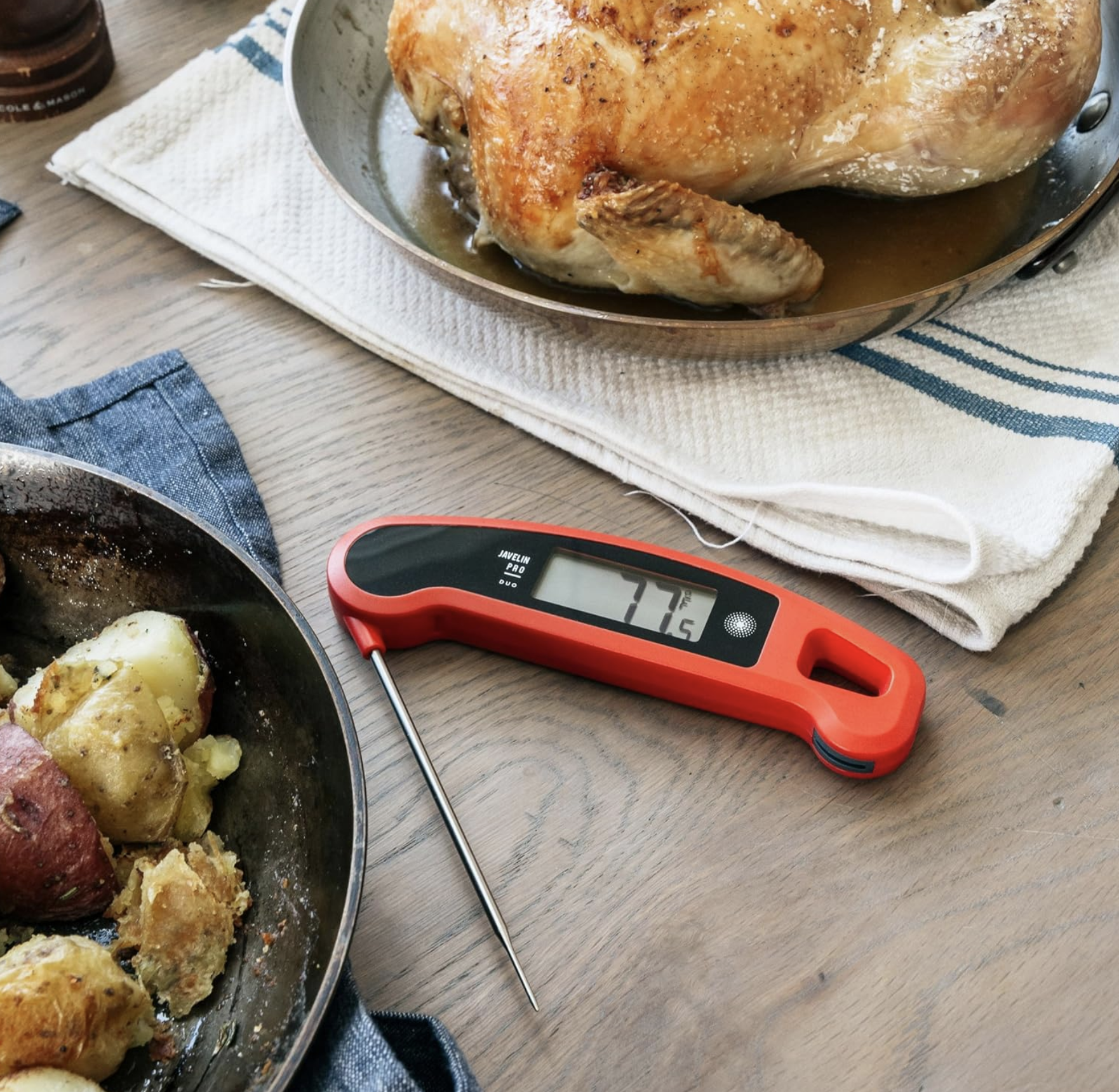
Brown butter smells like a promise. That nutty, toffee-scented aroma that fills the kitchen in just a few minutes signals something better than plain melted butter. The French call it beurre noisette (hazelnut butter) because the scent is so distinctly nutty, even though no nuts are involved.
What makes brown butter special isn't just the color change. It's chemistry. When butter heats past its melting point, the milk proteins and lactose undergo the Maillard reaction, the same browning process that gives seared steak its crust and bread its toasted aroma. You're creating hundreds of new flavor compounds that don't exist in regular butter.
The technique takes five minutes and requires nothing but butter and a light-colored pan. Once you understand what's happening and what to watch for, you'll reach for brown butter constantly: on pasta, vegetables, fish, baked goods, and especially potatoes.

The Science of Brown Butter
Regular butter is about 80% fat, 16-18% water, and 1-2% milk solids (proteins and lactose). When you heat butter, three things happen in sequence:
- Melting (90-95°F): Solid fat becomes liquid
- Foaming (212°F): Water boils off as steam, creating bubbles
- Browning (starting around 250°F): As water evaporates, milk proteins and lactose undergo the Maillard reaction
That third stage is where the magic happens. Notice the browning temperature is lower than the 300-320°F threshold for most Maillard reactions. That's because the water has already evaporated, so the milk solids can reach browning temperatures while sitting in hot fat. The casein proteins and lactose in milk solids react to form melanoidins (brown pigments) and a cascade of flavor compounds: pyrazines for nuttiness, furans for caramel notes, and various aldehydes for complexity.
This is the same reaction that browns bread crust and sears steak, just happening in dairy form. You're essentially pre-creating Maillard compounds that you can add to any dish.
Why Brown Butter Works So Well in Potatoes
Brown butter isn't just a flavor upgrade for twice-baked potatoes. It's a structural improvement.
The sequence matters: warm fat first, dairy second. When you fold warm butter into hot potato flesh (just after the starch has fully gelatinized at 205°F), the fat coats the starch before it can absorb free water. This is the same principle behind silky mashed potatoes.
Why brown butter specifically?
- Coated starch absorbs less free water, preventing gummy texture
- Fat limits starch swelling, keeping the texture light rather than gluey
- Maillard compounds are heat-stable, surviving the second bake without degrading
- Nutty depth complements potato starch without competing with cheese or toppings
Plain butter helps with texture. Brown butter helps with texture AND adds complexity that regular butter can't provide.
For the science of why the first bake matters for potato texture, see our baked potato guide.
Tips & Techniques
Use a light-colored pan. Stainless steel, light enamel, or a light-bottomed saucepan lets you see the color change clearly. Dark pans hide the browning until it's too late.
Cut butter into pieces. Smaller pieces melt evenly, reducing the risk of hot spots that brown unevenly or burn.
Swirl, don't stir. Gentle swirling keeps the milk solids moving without splashing. Once the foaming subsides, the solids settle and brown on the bottom.
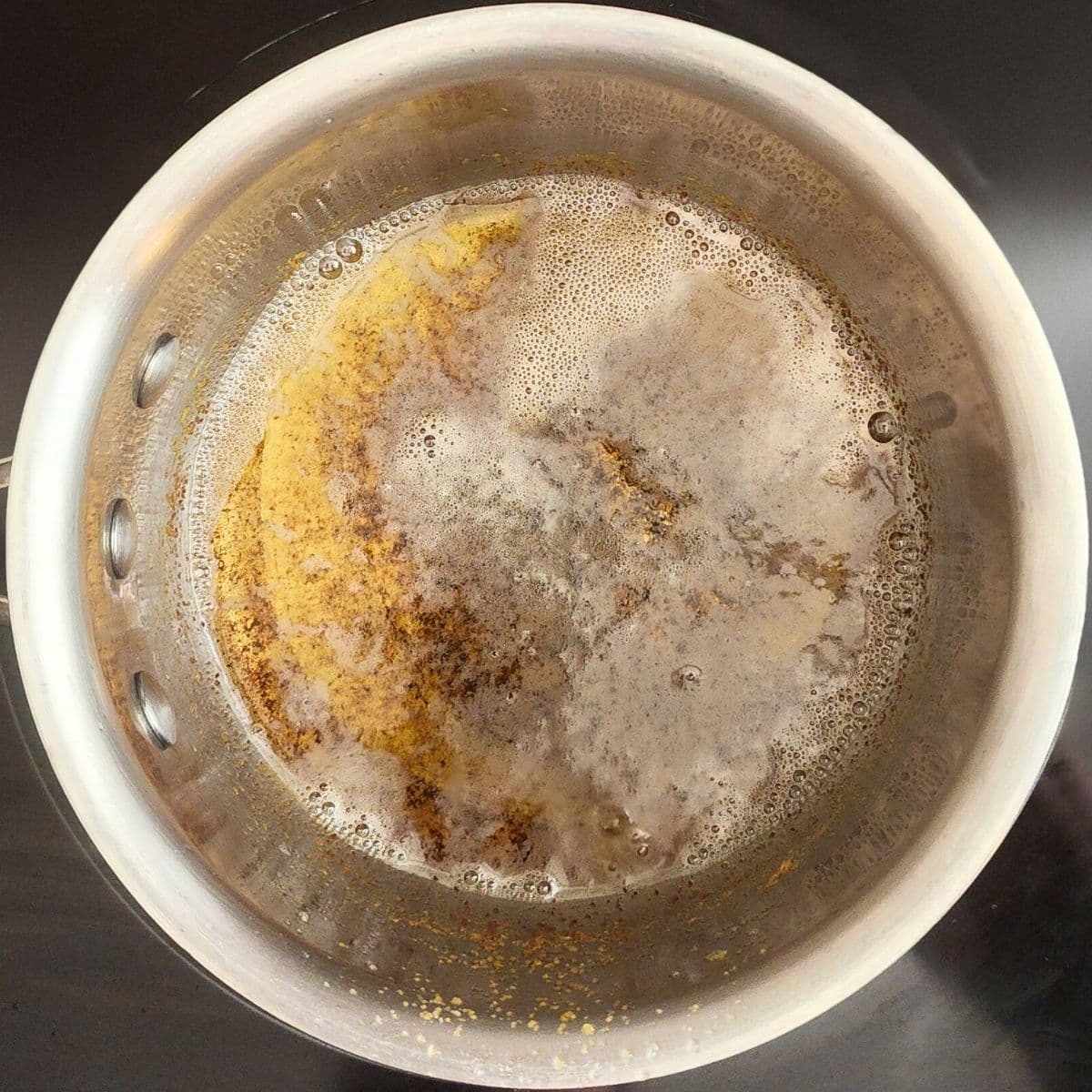
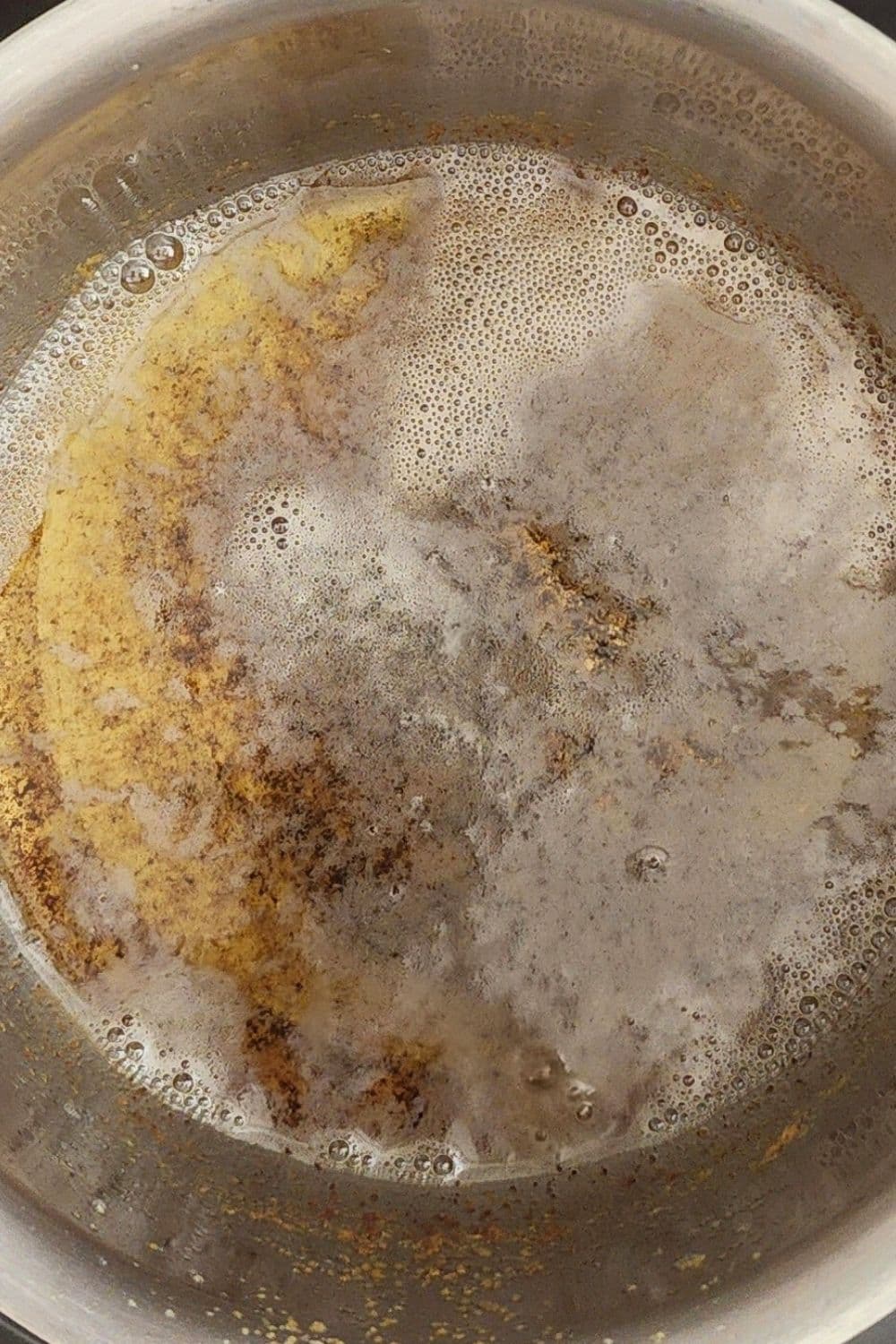
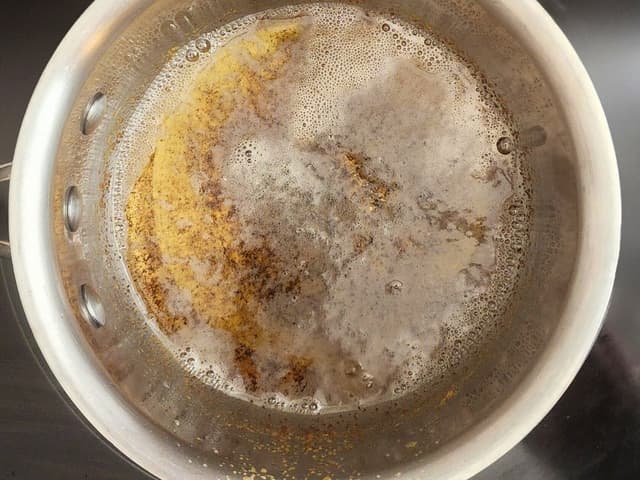
Watch for the color shift. The butter goes from pale yellow to golden to amber. Golden-amber with speckled brown bits is perfect. Dark brown means you've gone too far; start over.
Listen and smell. When the crackling slows (water is gone) and you smell hazelnuts, you're close. Remove from heat slightly before you think it's done; residual heat continues the browning.
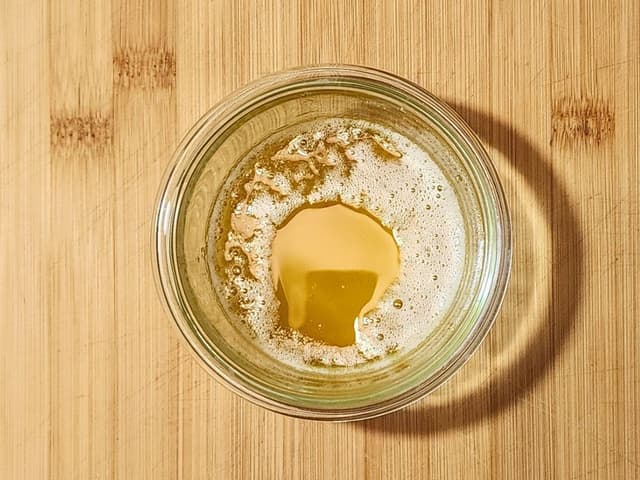
Transfer immediately. Pour into a heatproof bowl the moment it's done. Leaving it in the hot pan risks burning.
Uses Beyond Potatoes
Pasta: Toss with fresh pasta, sage, and parmesan for a classic brown butter sage sauce. The Maillard compounds complement the wheat starch beautifully.
Fish: Spoon over pan-seared sole, trout, or any white fish. The nutty depth pairs with delicate fish without overwhelming it.
Vegetables: Drizzle over roasted cauliflower, green beans, or Brussels sprouts. The toasted notes echo the vegetable browning.
Baked goods: Substitute brown butter for regular butter in cookies, blondies, or pound cake. The flavor becomes deeper and more complex.
Eggs: A tablespoon of brown butter in scrambled eggs or an omelette adds richness that regular butter can't match.
Storage & Make-Ahead
Brown butter keeps better than most people expect. The browned milk solids are stable, and the flavor holds up well when stored properly.
Refrigerated (up to 2 weeks): Pour into a sealed jar. It solidifies like regular butter. This is the best everyday option: water has been driven off, Maillard compounds are stable, and the fat protects the flavor molecules.
Frozen (up to 3 months): Portion into ice cube trays or small silicone molds, freeze until solid, then transfer to a freezer bag. Frozen brown butter retains flavor better than refrigerated. Pop out a cube whenever you need it.
Reheating: Reheat gently over low heat or in short microwave bursts. You're just melting, not re-browning. Avoid high heat or you'll scorch the milk solids.
Strained option: For longer shelf life, strain out the browned milk solids through a fine-mesh sieve. You'll get cleaner fat that keeps longer, but you'll lose some of the nutty depth. For potatoes, pasta, and vegetables, unstrained is better.
Brown Butter
Nutrition (per serving)
*Nutrition is estimated and may vary based on ingredients and portions.
Ingredients
Instructions
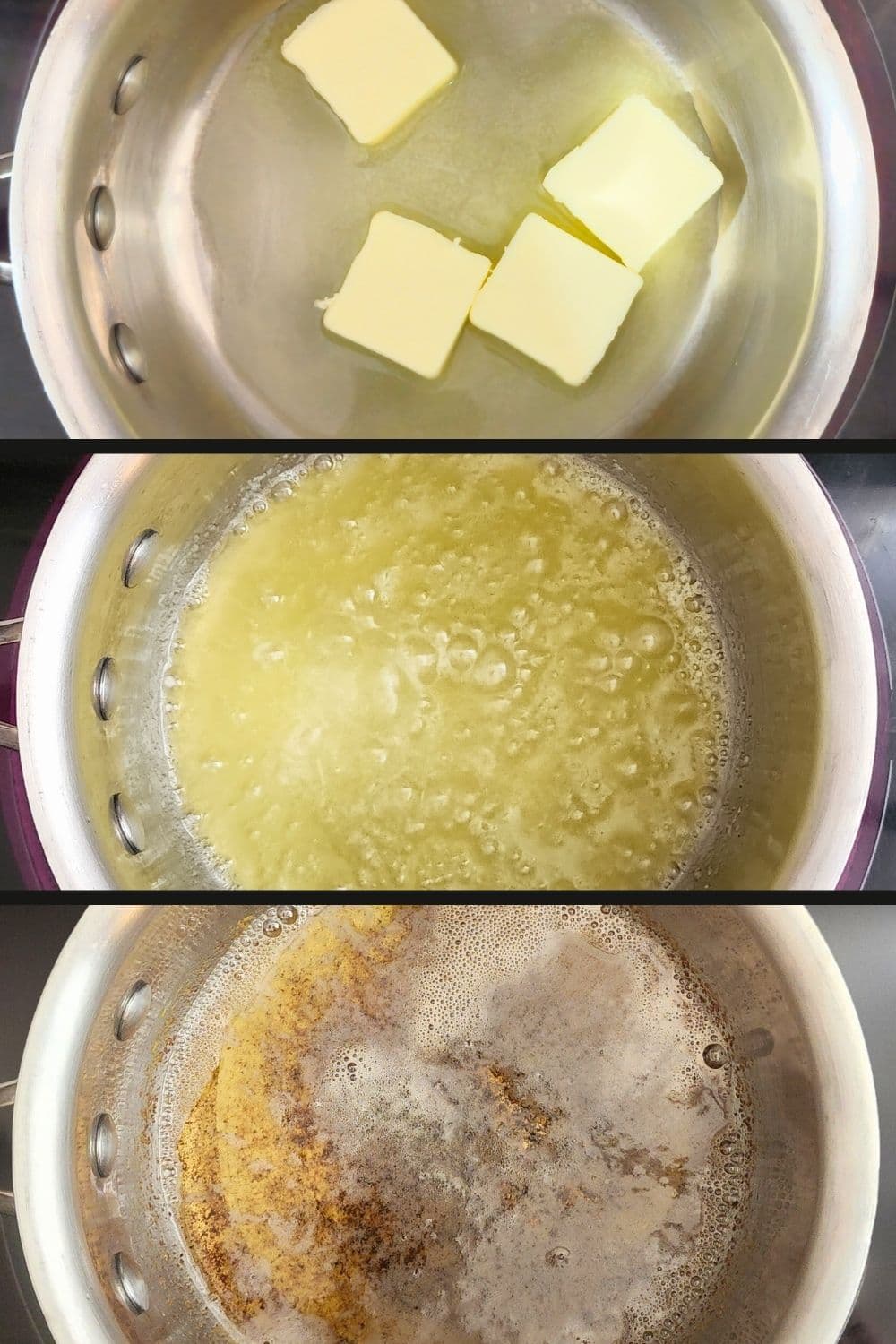
Place butter pieces in a light-colored saucepan or skillet over medium heat. Let melt completely, swirling occasionally.

Once melted, the butter will begin to foam as water evaporates. Continue cooking, swirling gently. The crackling sound is water leaving.
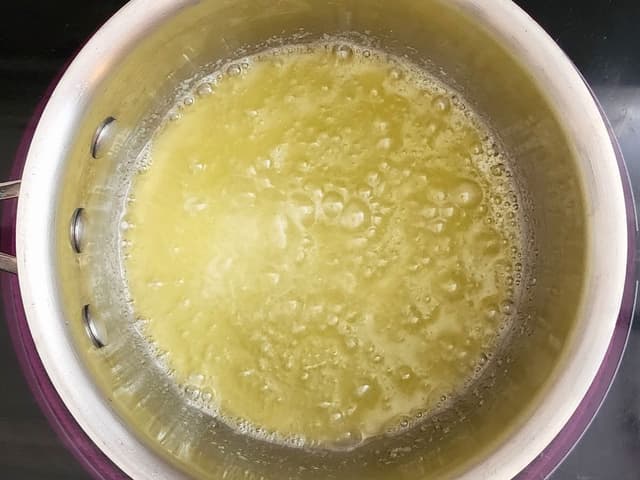
As foaming subsides, milk solids will settle to the bottom and begin to brown. Watch carefully. The butter will shift from pale yellow to golden to amber.
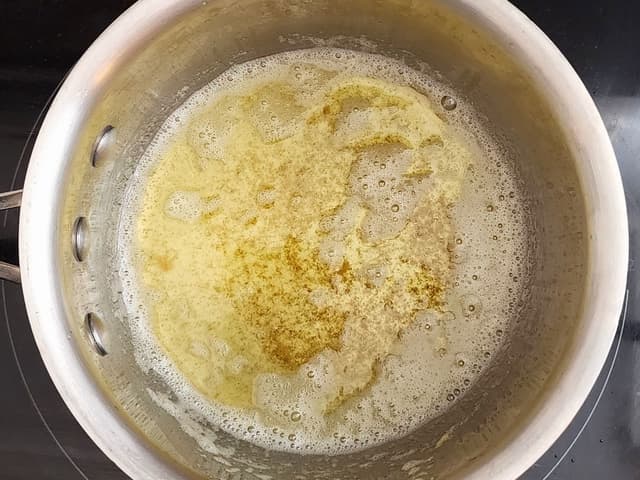
When butter is golden-amber with speckled brown bits on the bottom and smells nutty, immediately remove from heat and pour into a heatproof bowl. Total time from foam to brown is usually 2-3 minutes.
Use immediately, or let cool and store in a sealed container. Refrigerate for up to 2 weeks.
Chef's Notes
- Use a light-colored pan so you can see the color change clearly. - Cut butter into tablespoon-sized pieces for even melting. - The shift from browned to burned happens fast. Remove from heat slightly early; residual heat finishes the job. - If you smell burning or see black flecks, start over. Burnt butter tastes acrid. - Salted butter works but browns faster due to the salt. Watch more carefully.
Frequently Asked Questions
You went too far. The window between perfectly browned and burned is narrow, maybe 30 seconds. The milk solids should be speckled brown, not black. If you see dark brown or black bits or smell anything acrid, start over. Use lower heat next time and remove from the pan a few seconds earlier.