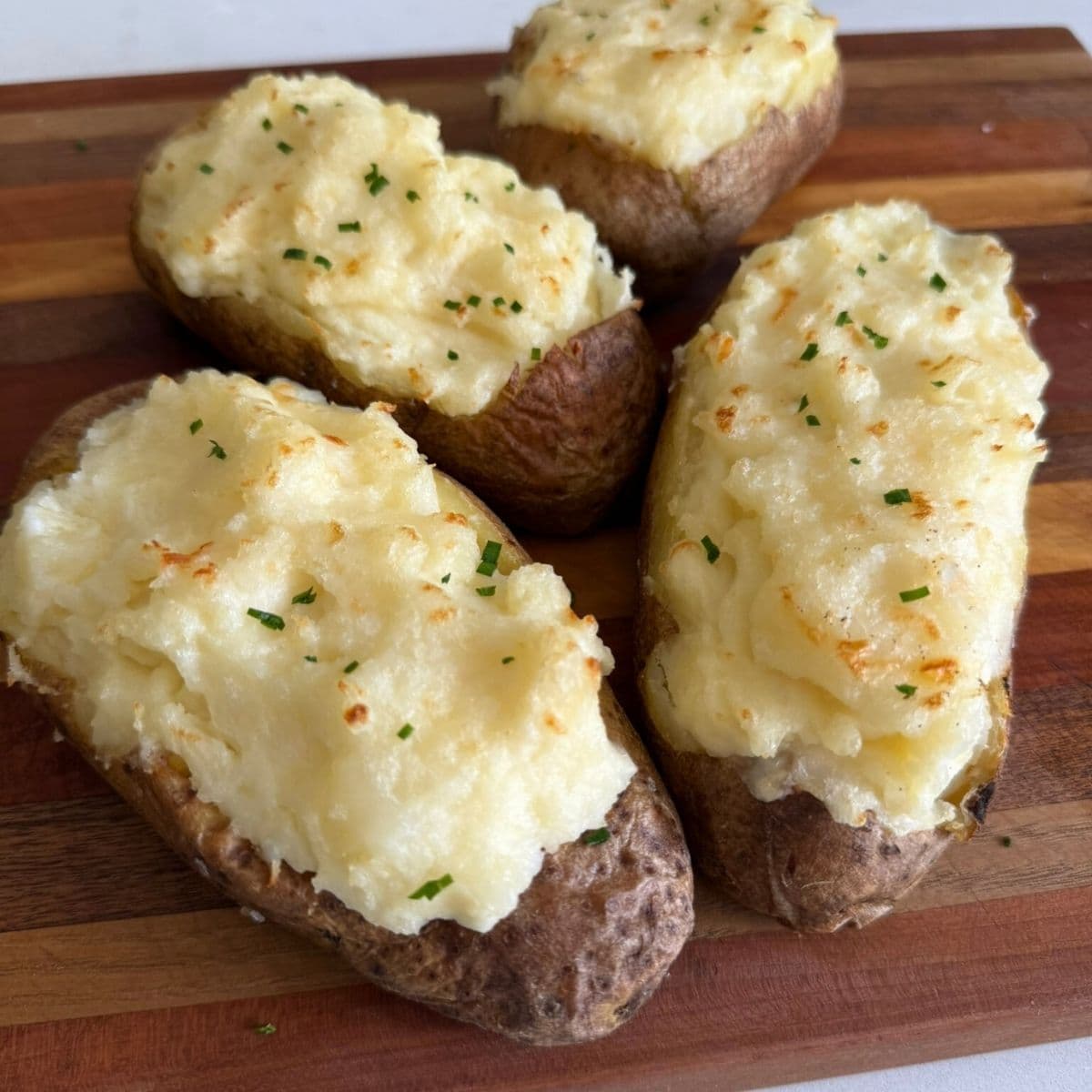
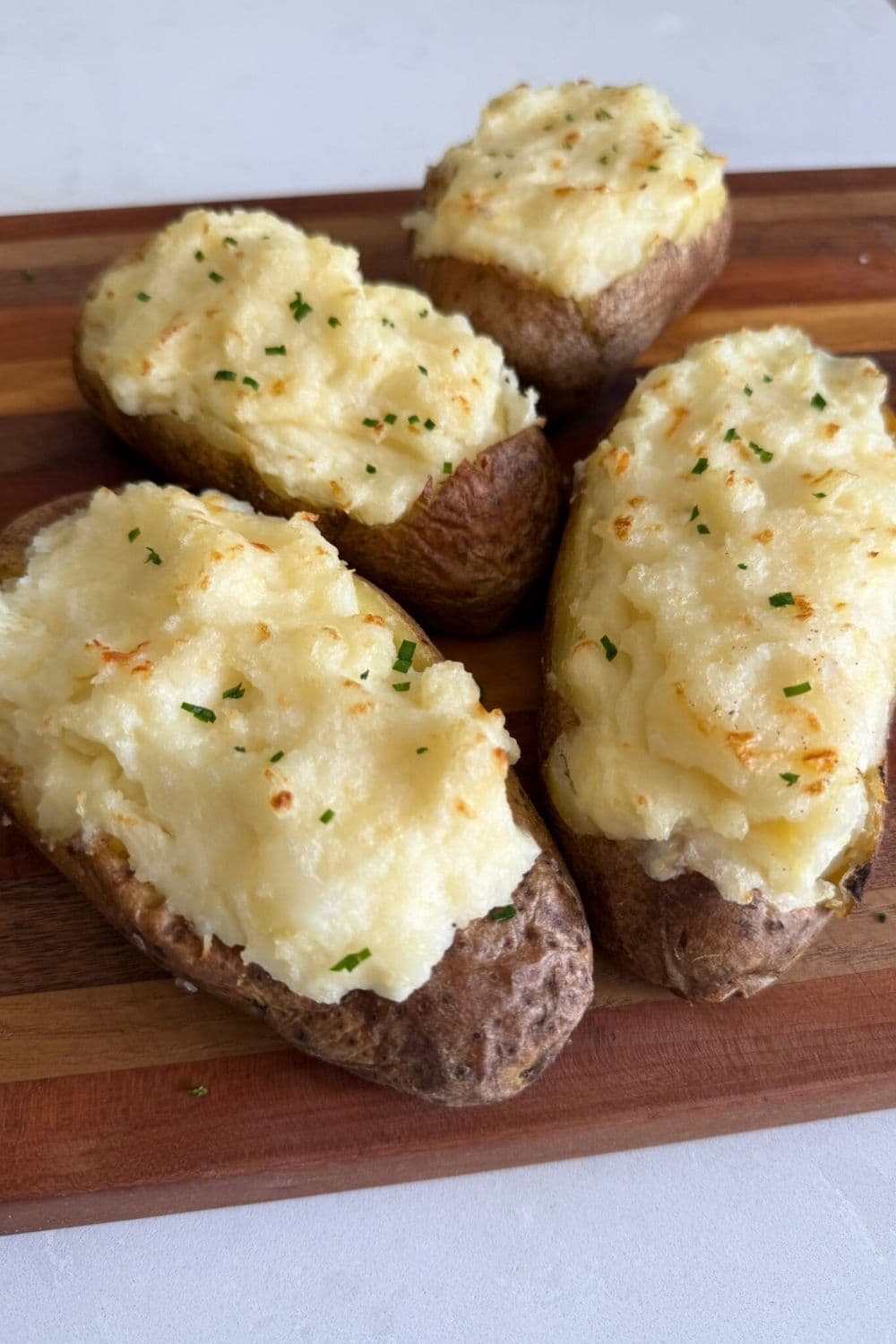
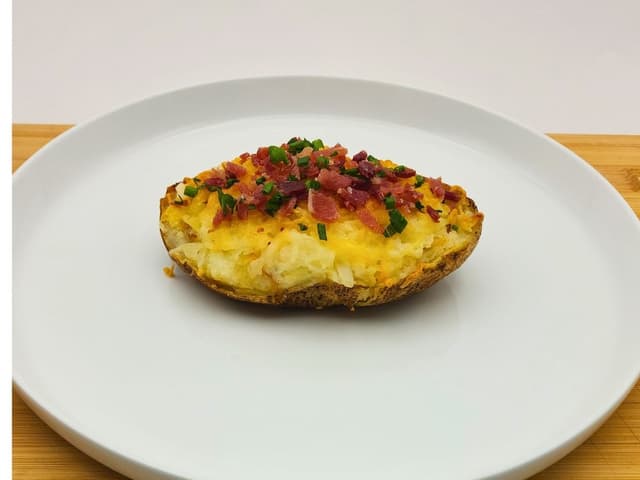
There's something about a twice-baked potato that feels special. That golden, cheese-topped shell cracking open to reveal a cloud of creamy, chive-flecked filling. It's the kind of side dish that earns a spot at every holiday table and prompts people to ask for seconds before the main course is even served.
What makes these work is the two-phase technique. The first bake builds structure: fluffy, properly gelatinized starch that holds its shape. The second bake sets a new structure with fat-enriched filling that stays creamy through reheating. Skip either phase or rush through them, and you end up with gummy, dense potatoes that no amount of cheese can save.
The best part? These are ideal for making ahead. Prepare them a day or two before, refrigerate, and bake when ready to serve. They actually taste better that way, and the fat in the filling prevents the starchy texture from firming up like plain baked potatoes do.
Why the First Bake Matters
The first bake isn't just about cooking the potato. It's about building structure that the second phase can reshape. Baking uncovered at high heat until the interior reaches 205°F ensures the starch structure fully develops and excess moisture escapes. Rush this step or wrap in foil, and the filling will turn gummy no matter what you add to it.
For the full science, see our guide on The Science of Perfect Baked Potatoes.
Tips & Variations
Brown butter upgrade: For deeper, nuttier flavor, use brown butter instead of regular melted butter. The pre-formed Maillard compounds complement the potato's starch and survive the second bake. It's a structural improvement, not just a flavor upgrade: the fat coats the starch matrix and helps prevent gummy texture.
Cheese options: Sharp cheddar is classic, but gruyère adds nuttiness, pepper jack brings heat, and smoked gouda creates a subtle smokiness. Mix cheeses for more complexity.
Popular add-ins:
- Crispy bacon crumbles
- Sliced green onions or scallions
- Diced jalapeños for heat
- Steamed broccoli florets
Make it vegetarian: Skip the bacon and add roasted garlic cloves or caramelized onions to the filling for savory depth.
Serving size: Each potato serves one as a hearty side, or you can halve them for smaller portions (12 halves from this recipe).
Serving Suggestions
Twice-baked potatoes pair beautifully with:
- Roasted meats: Beef tenderloin, prime rib, roasted chicken
- Grilled proteins: Steaks, pork chops, grilled salmon
- Holiday tables: Thanksgiving, Christmas, Easter dinners
- Casual gatherings: Cookouts, potlucks, game day spreads
Make-Ahead & Storage
Make ahead: This is an ideal make-ahead dish. Complete through step 7 (filled but not second-baked), cover tightly, and refrigerate for up to 2 days. Add 5-10 minutes to the second bake time when cooking from cold.
Freezing: Freeze filled potatoes before the second bake. Arrange on a sheet pan, freeze until solid, then transfer to freezer bags. Bake directly from frozen at 400°F for 30-40 minutes until heated through and cheese is golden.
Reheating: Already-baked potatoes reheat well in a 350°F oven for 15-20 minutes. The filling stays creamy because the fat prevents starch retrogradation.
Storage: Refrigerate baked potatoes in an airtight container for up to 3 days.
Twice-Baked Potatoes
Nutrition (per serving)
*Nutrition is estimated and may vary based on ingredients and portions.
Ingredients
Instructions
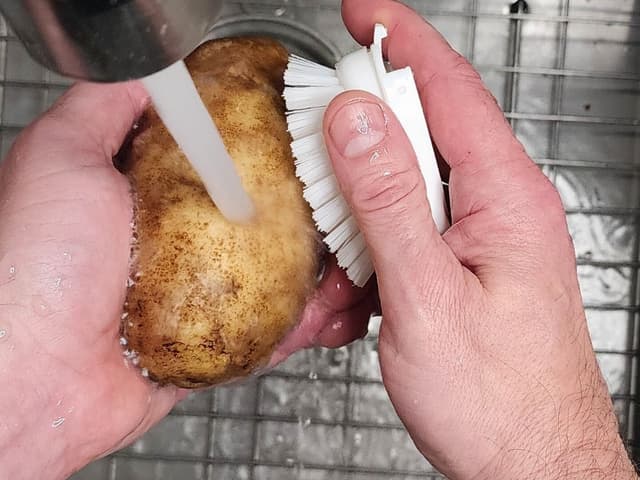
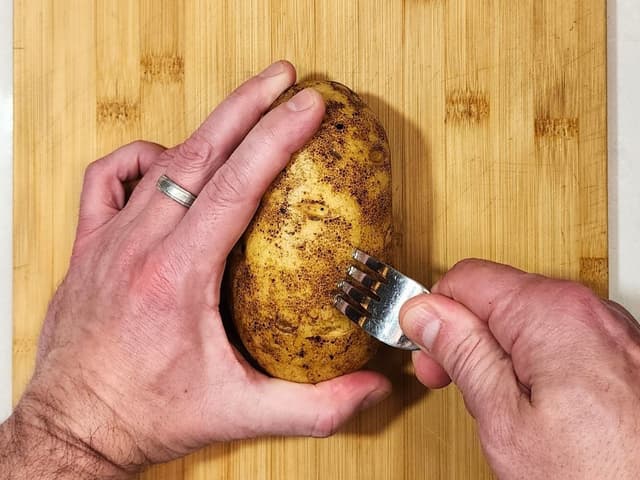
Preheat oven to 400°F. Scrub potatoes and pat dry. Rub each potato lightly with olive oil and pierce several times with a fork.
Place potatoes directly on the oven rack (with a sheet pan below to catch drips). Bake uncovered for 60-75 minutes, until a thermometer inserted into the center reads 205°F and a knife slides in easily. Do not wrap in foil.
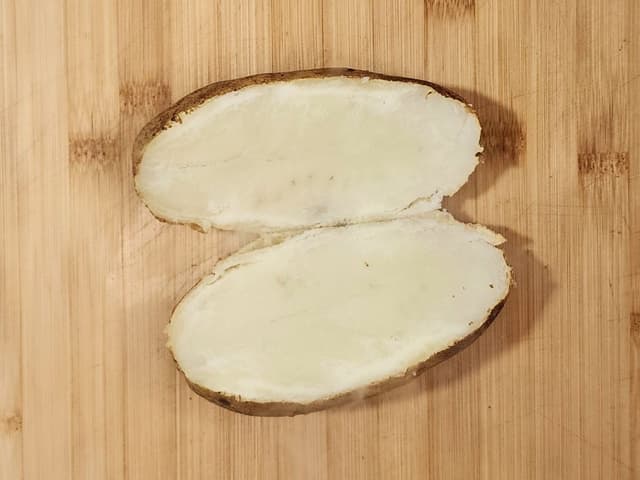
Remove potatoes from oven. Immediately slice each potato in half lengthwise. Let steam escape for 1-2 minutes before handling.
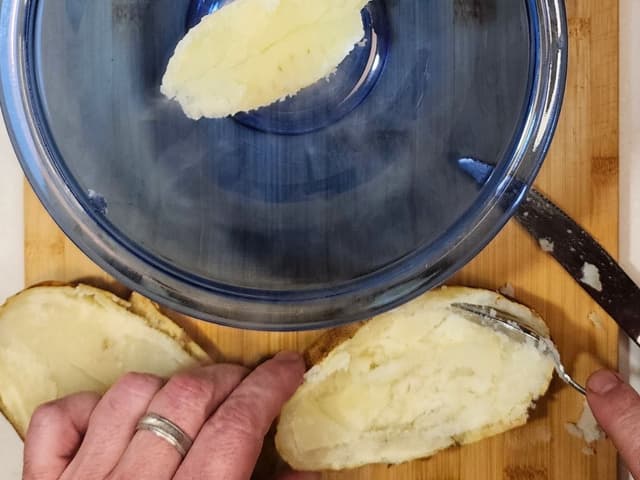
Carefully scoop the flesh into a large bowl, leaving about 1/4 inch of potato in each shell to maintain structure. Arrange shells on a baking sheet.
In a small saucepan over low heat, melt the butter. Stir in the sour cream and milk until warmed through (do not boil). Warming the dairy helps it incorporate smoothly into the hot potatoes.
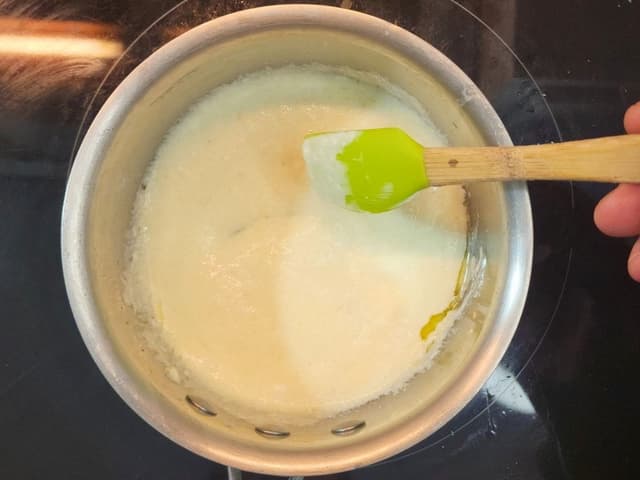
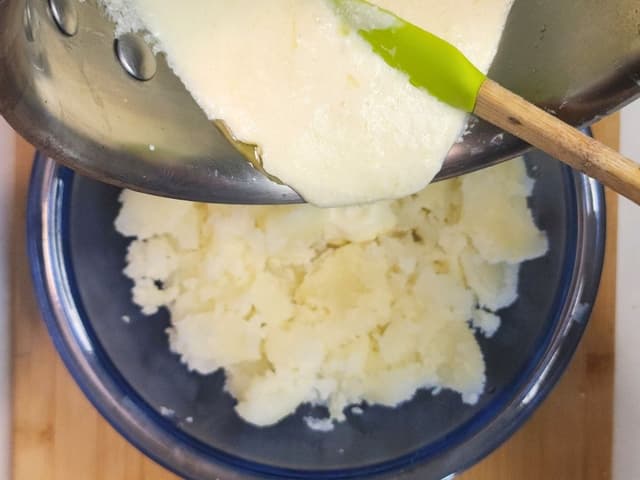
Pour the warm butter mixture over the potato flesh. Mash gently with a potato masher until mostly smooth. Fold in garlic powder, chives, salt, and pepper. If mixture seems dry, add more milk 1 tablespoon at a time.
Spoon the filling loosely into the shells, mounding slightly. Do not pack the filling. Top evenly with shredded cheddar cheese.
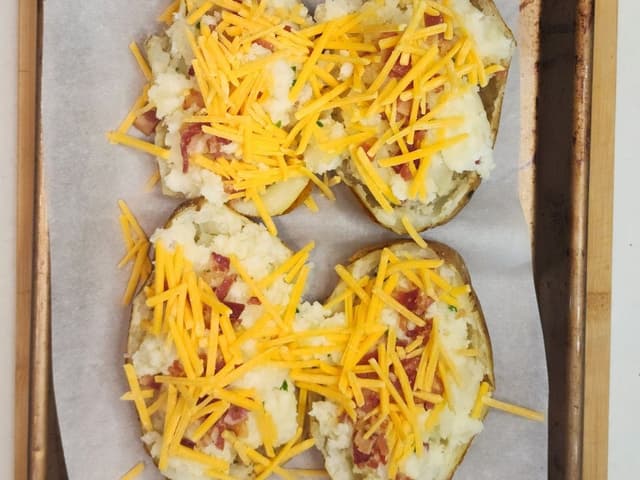
Reduce oven to 350°F. (The lower temperature gently reheats the filling and melts the cheese without over-browning or drying out the shells.) Bake for 15 minutes, until cheese is melted and potatoes are heated through. Serve hot, garnished with extra chives if desired.
Chef's Notes
- Use russet potatoes for the fluffiest texture. Waxy potatoes like Yukon Golds won't work as well. - The 205°F internal temperature is key. Below 200°F, the starch structure may not fully develop. - Letting steam escape before scooping prevents condensation inside the shells. - Fat first, liquid second: warm butter coats the starch before it can absorb free water. This is why we warm the butter and fold it into the hot potato flesh before adding dairy. - The shell won't be as crispy as a plain baked potato, and that's expected. The filling adds moisture that softens the interior surface. What you're after is a firm, scoopable shell with a slightly crisp exterior edge.
Frequently Asked Questions
No. Foil traps steam and essentially steams the potato instead of baking it. The interior becomes waterlogged and gummy, and no amount of butter or cheese can fix that texture. Always bake uncovered for fluffy, properly structured potatoes. For the science behind this, see our baked potatoes guide.