
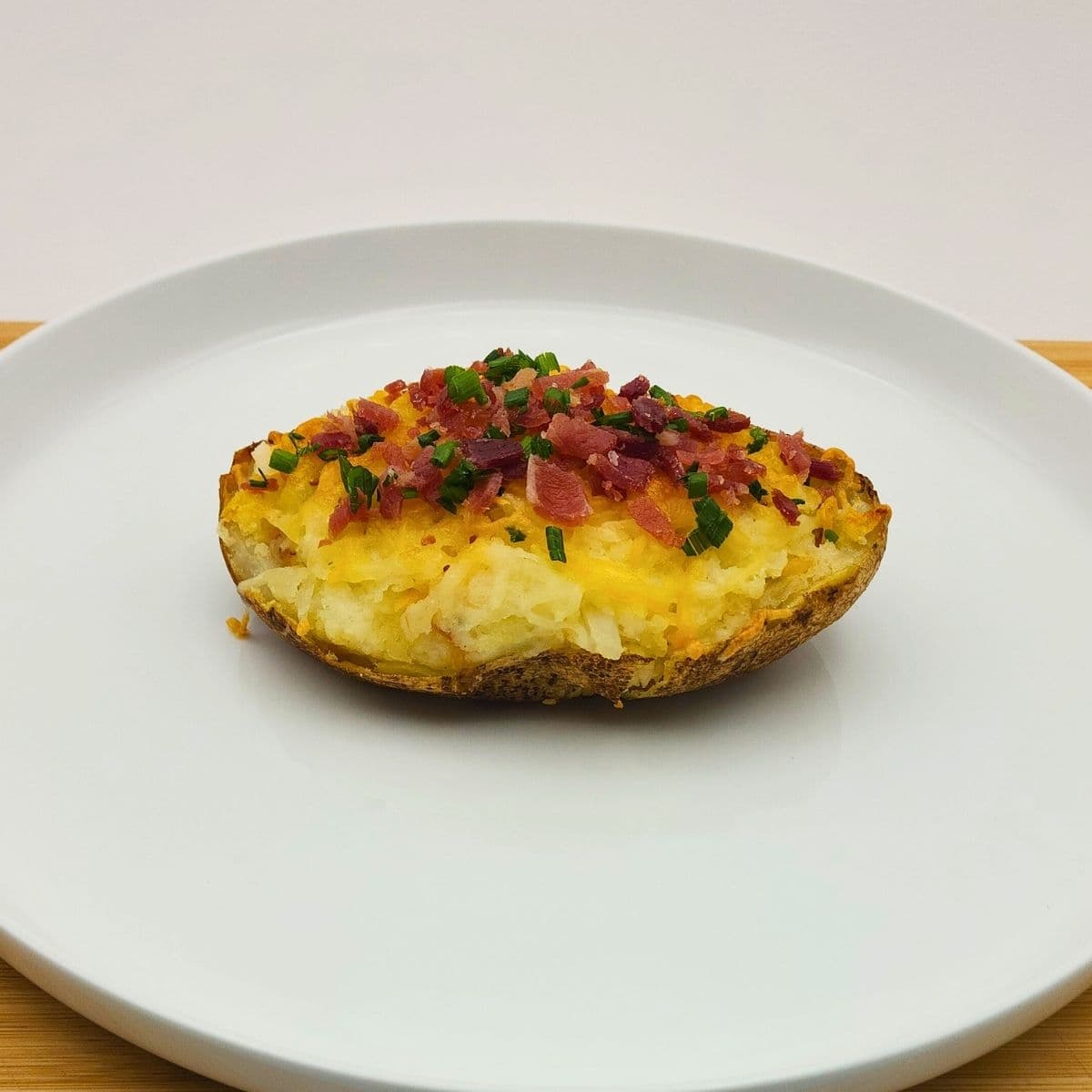
Most people wrap potatoes in foil before baking them. It seems logical: the foil traps heat, the potato cooks faster, and cleanup is easy. But here's the problem: foil steams your potato instead of baking it. The interior turns dense and gummy. The skin stays soft and pale. You lose on both counts.
A great baked potato has two things going for it: a fluffy interior and crispy, golden skin. The good news is that the same techniques produce both. It all comes down to moisture control. The skin regulates how steam escapes during cooking. Dry baking lets moisture leave gradually, so the flesh stays light while the surface gets hot enough to brown. Foil traps that steam and ruins everything.
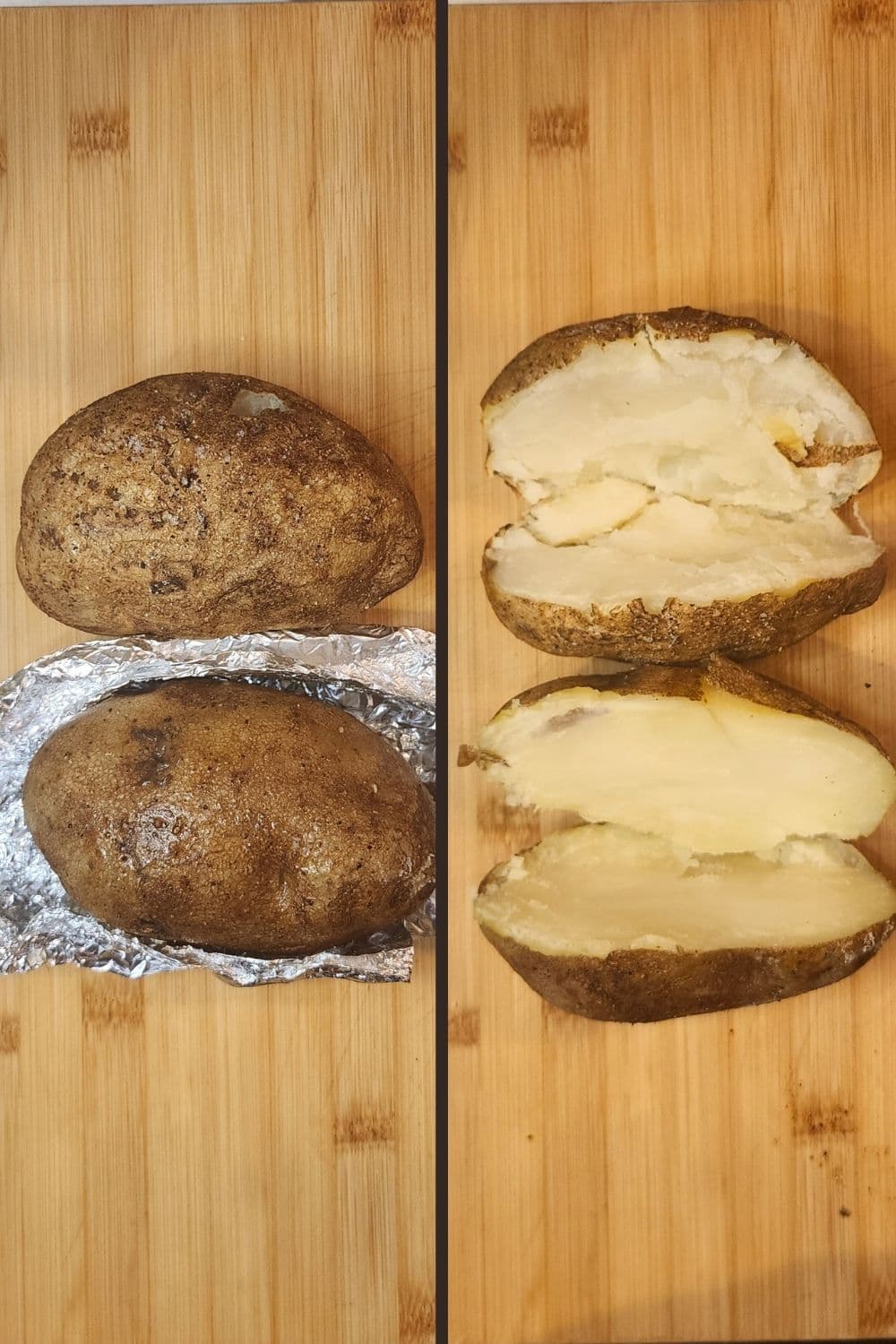
The Paradox: A raw potato is about 80% water. A perfectly baked potato still contains most of that water. So why does a fluffy interior feel dry? Because "fluffy" doesn't mean dehydrated. It means the water is bound within the gelatinized starch matrix, not sloshing around loose. A gummy potato has free water. A fluffy potato has captured water. Same moisture, different structure.
Start with the Right Potato
Not all potatoes bake the same way. The difference comes down to starch content and moisture.
Russet potatoes (also called Idaho potatoes) are the gold standard for baking. They have the lowest moisture content of common potato varieties, with more of their weight as starch. This high starch content creates a fluffy, mealy texture when cooked. The skin also crisps beautifully because there's less moisture fighting to escape. Russets are high in amylose, the type of starch that makes potatoes light and dry rather than dense and waxy.
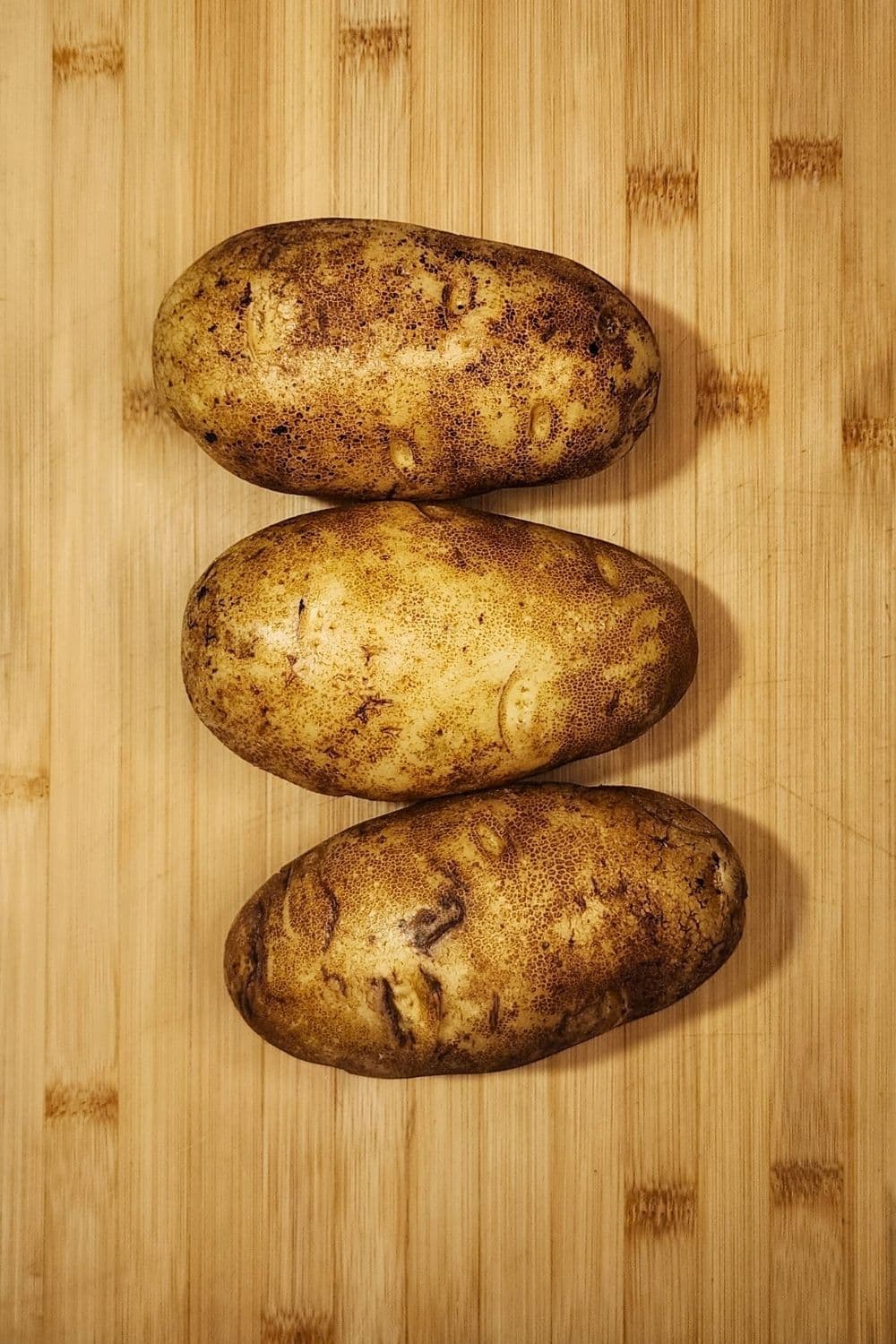
Yukon Gold and other waxy varieties have more moisture and a different starch composition (higher amylopectin). They hold together better and turn creamy rather than fluffy. If you bake a Yukon Gold, you'll get a denser, moister result. Not bad, just different. Save these for roasting or mashing.
Sweet potatoes are a different species entirely, and they behave differently during baking. Raw sweet potatoes contain moderate starch, but something interesting happens in the oven: enzymes break down that starch into maltose (a sugar). This is why baked sweet potatoes taste so much sweeter than raw ones. The maltose also caramelizes, creating deep browning and that characteristic sweet flavor.
For the fluffiest baked potatoes, stick with russets.
Why Russets? Commercial russet varieties are literally bred for baking. They have high amylose starch (for fluffiness), thick skin (for crispness), low sugar content (to prevent burning), and a cell structure that creates light texture. Yukon Golds are bred to hold their shape. Russets are bred to fall apart in the best way.
Why Dry Heat Matters: The Maillard Reaction
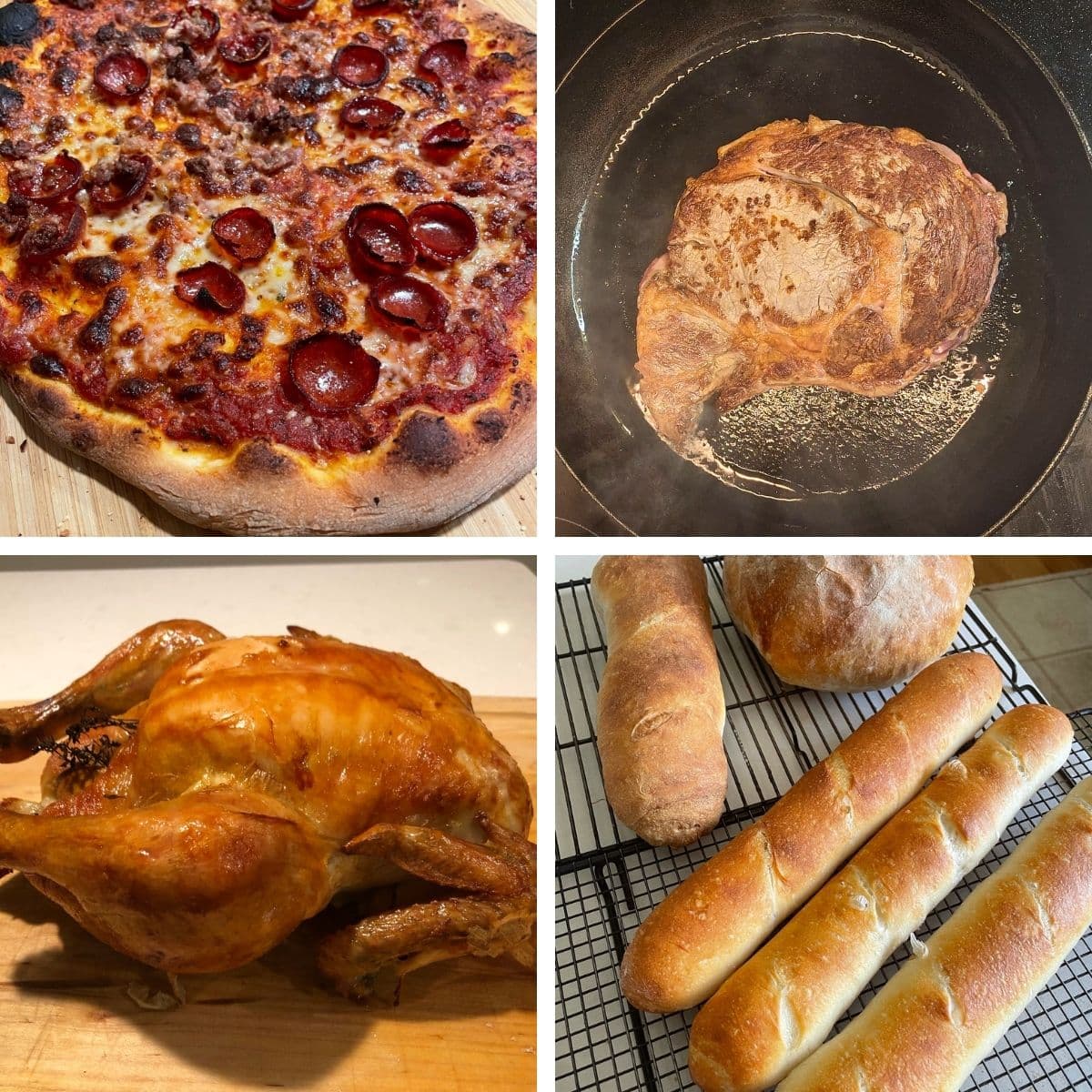
The golden color on a properly baked potato comes from the Maillard reaction, the same chemical process that browns steak, toasts bread, and gives roasted coffee its complex flavor. But the Maillard reaction does more than create color. It produces hundreds of new flavor compounds that don't exist in raw potatoes.
The Maillard reaction happens when amino acids (proteins) react with reducing sugars in the presence of heat. This creates brown pigments called melanoidins and complex savory, toasted flavors. For potatoes, the free amino acids react with available sugars (glucose, fructose, or maltose) to produce depth and character.
Here's what the reaction needs to work:
- Heat: The Maillard reaction kicks in around 300-320°F at the surface
- Dry conditions: Water interferes with the reaction
- Time: Extended exposure allows deeper browning
This explains why boiled or steamed potatoes don't develop roasted flavor. The constant presence of water keeps the surface temperature at 212°F (the boiling point) and prevents the Maillard reaction from happening. Baking in a hot, dry oven removes moisture from the surface, allowing temperatures to climb high enough for browning and flavor development.
The Foil Problem
Wrapping potatoes in foil seems like a smart shortcut, but it fundamentally changes what happens in the oven. The damage goes beyond the skin.
The potato skin acts as a semi-permeable membrane during baking. It regulates how steam escapes from the flesh. With dry baking, moisture leaves gradually through the skin, and the interior becomes light and fluffy. The starch granules swell and separate properly.
Foil changes this entirely. It creates a sealed packet where steam has nowhere to go. The potato sits in its own moisture, essentially boiling instead of baking. The flesh becomes waterlogged and dense. Even if you peel off the skin before eating, the interior texture is already ruined.
The Idaho Potato Commission puts it bluntly: foil "traps the moisture in the potato, resulting in a less-than-desirable or gummy interior texture."
Foil has its place for holding potatoes warm after baking or cooking over direct flame, but in an oven it fundamentally changes the cooking method. For baking, skip the foil. Let the potato bake uncovered so moisture can escape gradually. You'll get a fluffy interior and crispy skin.
Why Foil Actually Slows Cooking
Here's the counterintuitive part: foil doesn't speed up baking. It slows it down.
An unwrapped potato receives heat three ways: radiation from oven walls, convection from hot air, and conduction through the dried skin. Once the surface dries, it can reach 300°F or higher, creating a steep temperature gradient that pushes heat rapidly into the center.
Foil blocks all of this. Steam trapped inside keeps the surface temperature near 212°F, the boiling point of water. Heat transfer relies entirely on steam condensation cycles, which is far less efficient than dry oven heat. The potato reaches 205°F internal later, not sooner.
Myth: "Foil cooks potatoes faster." Reality: Foil traps steam that caps surface temperature at 212°F. Unwrapped potatoes reach 300°F+ at the surface, driving heat into the center faster. Foil-wrapped potatoes take longer AND taste worse.
Do People Actually Eat the Skin?
of Americans eat the skin on baked potatoes—the highest rate of any cooking method. Roasted came in at 76%, mashed at 71%, and boiled at just 58%.
Baked potato skin is popular because it crisps up and takes on flavor in a way that boiled or steamed skin doesn't.
But even if you're in the 15% who skip it, the techniques in this guide still matter. The skin controls moisture escape during baking. Foil-wrapped potatoes have gummy interiors even after you peel them. The skin is the engineering layer, not just the edible layer.
Techniques That Actually Work
The goal is simple: let moisture escape gradually while applying consistent heat. These techniques produce both a fluffy interior and crispy skin.
Salt First, Oil Last
America's Test Kitchen found the order matters. Their method: dip raw potatoes in salted water before baking, then brush with oil only after the potato is fully cooked. A final 10 minutes in the oven crisps the oiled skin into something chip-like.
Why this sequence? The salt water seasons the skin and encourages it to dry out during baking. Oil applied early traps moisture and makes the skin leathery. Oil applied after the skin has already dehydrated creates a crispy, crackly crust.
Some bakers take the salt concept further and bake potatoes on a bed of coarse salt. This creates an intensely dry environment that wicks moisture from the skin, producing what one source describes as an "unbelievably crisp" exterior.
Bake on a Rack, Not a Sheet
Where you place the potato matters. Baking directly on the oven rack (or on a wire rack over a baking sheet) maximizes air circulation. Heat reaches the entire skin evenly, and moisture can evaporate from all sides.
Placing potatoes directly on a flat pan works, but the bottom won't crisp as well because some moisture gets trapped between the potato and the pan. A rack solves this.
Pierce the Skin (Optional but Safe)
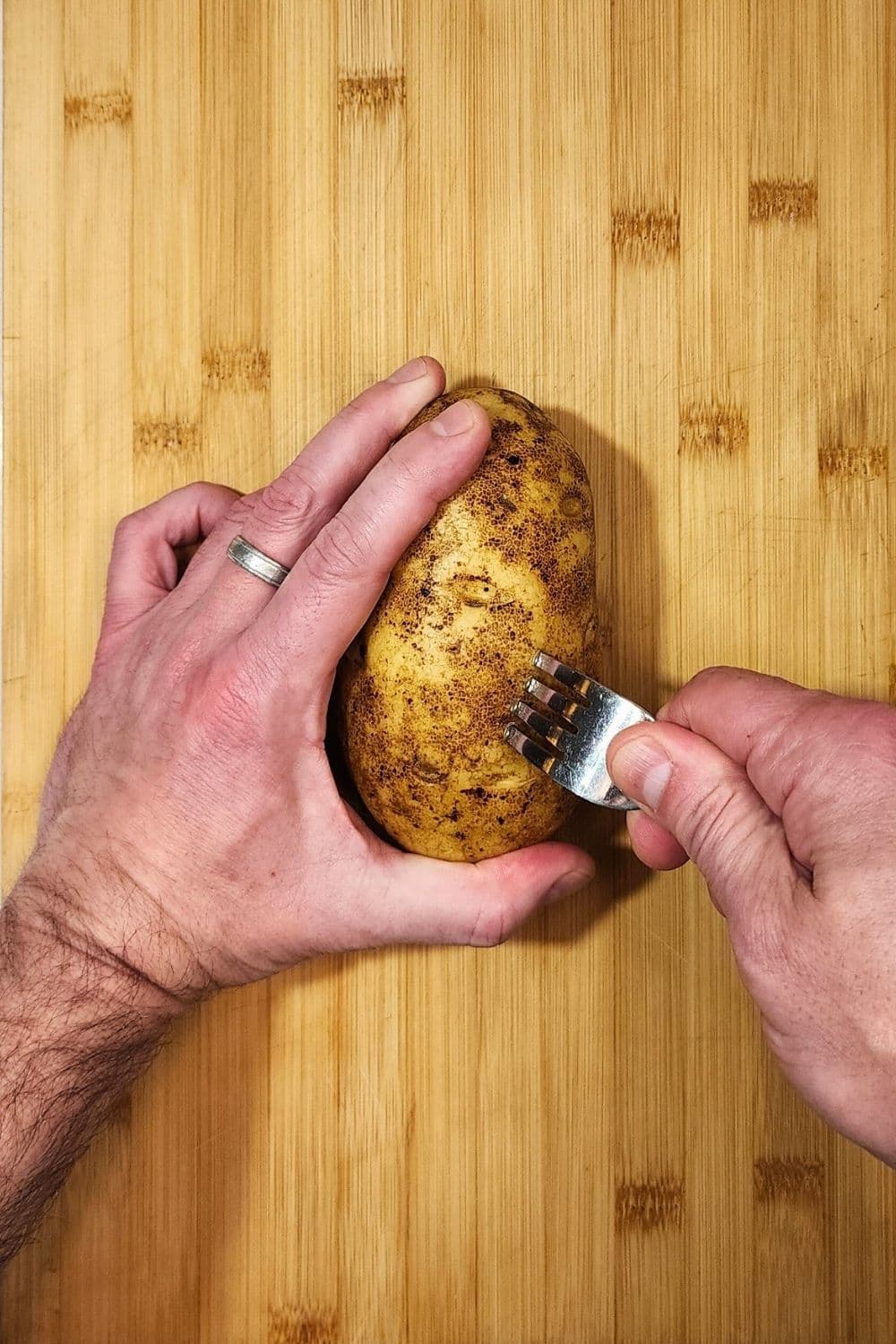
Most potatoes won't explode in the oven, but some do. The Idaho Potato Commission recommends piercing each potato a few times per side to prevent the occasional burst. A fork works fine, and the holes don't affect the final texture.
Split Immediately After Baking
As soon as the potato comes out of the oven, cut an X on top and squeeze the ends to push the flesh up. Trapped steam recondenses if you let it sit whole, collapsing the fluffy cell structure. Immediate slicing releases the pressure and keeps the starch granules separated.
Add Warm Butter First
The topping sequence matters more than most people realize. For the fluffiest texture:
- Split the potato immediately after baking
- Let steam escape for 30-60 seconds
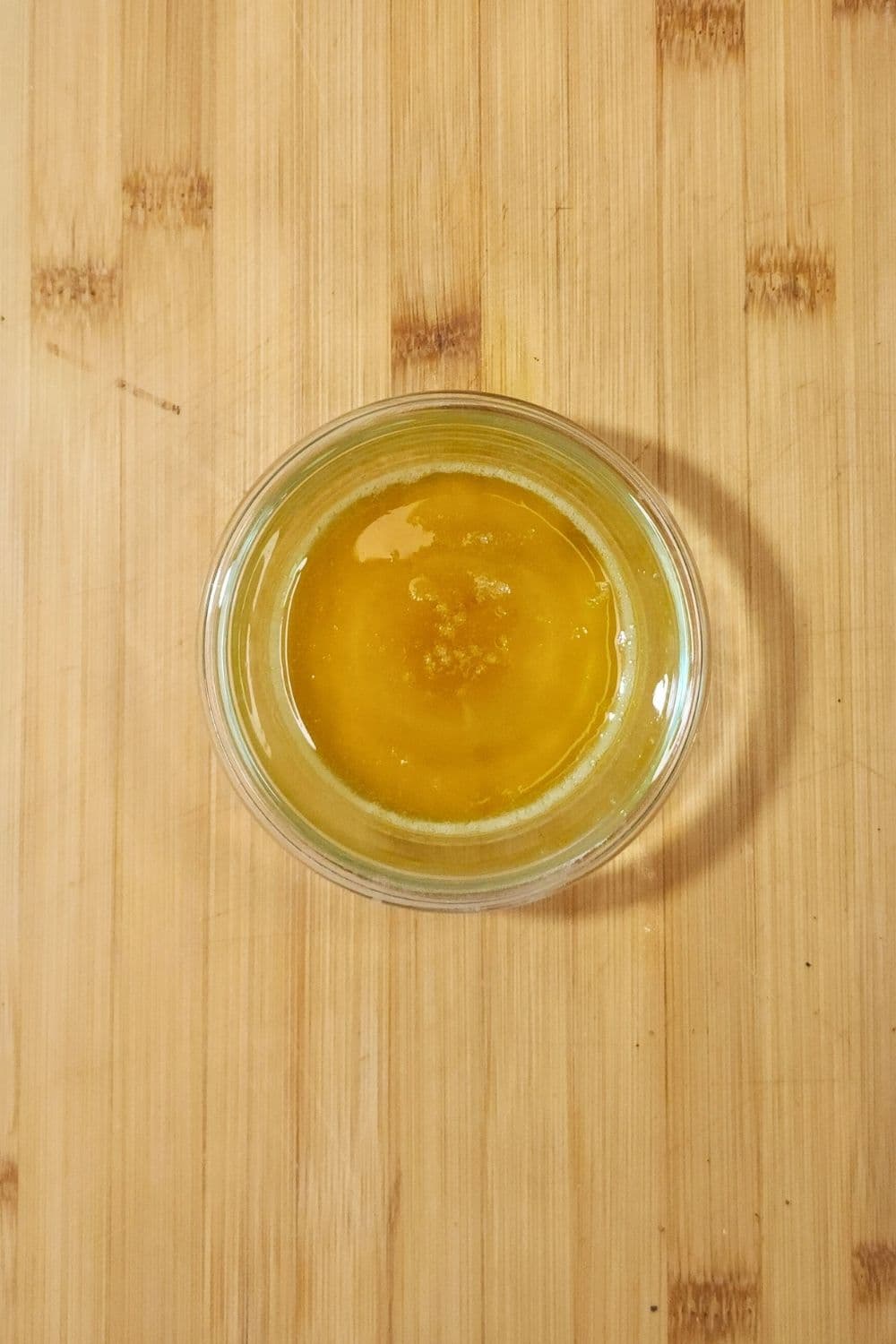
- Add warm (not cold) butter
- Fluff or fold gently with a fork
- Add dairy (sour cream, cheese) last
Why warm butter first? At 205°F, the potato's starches are fully gelatinized. Warm butter coats those starch granules before they can absorb free water. This limits water uptake and creates a creamy-yet-fluffy texture. Cold butter doesn't coat as effectively, and adding dairy first lets the starch absorb liquid before fat can protect it.
This is the same principle behind good mashed potatoes: fat first, liquid second. The order prevents gumminess.
Temperature and Time
Getting the oven temperature right balances cooking speed with browning quality.
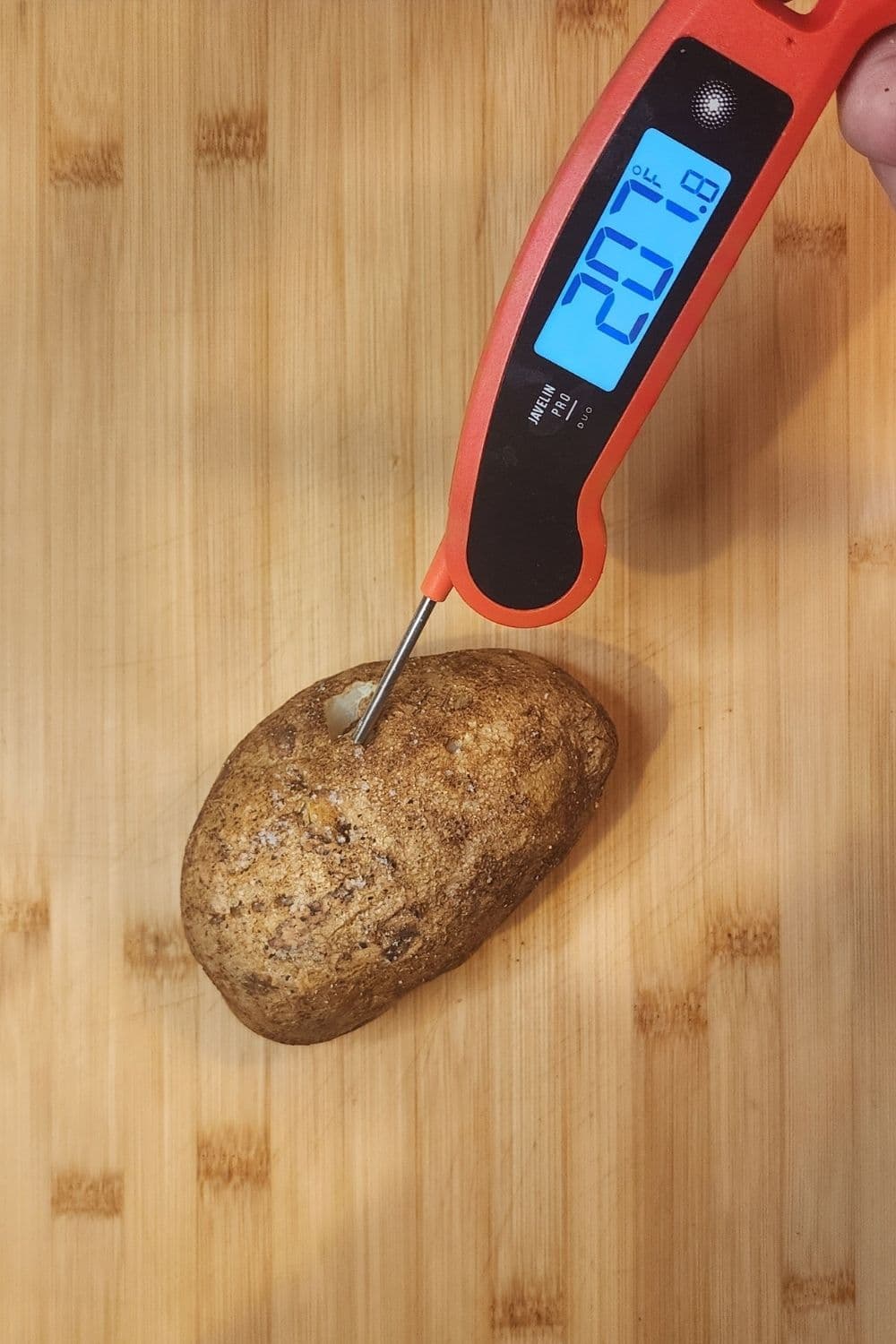
400-450°F is the sweet spot for most baked potatoes. At these temperatures, a large russet (10-14 oz) takes about 60-90 minutes to reach the ideal internal temperature of 205°F. That internal temp is key: it's when the starches fully gelatinize and the flesh becomes light and fluffy.
Why 205°F Matters: Below ~200°F, the starch structure may not fully develop, leaving a denser, chalkier texture. Above ~210°F, prolonged heat increases the risk of pectin breakdown and a gluey result. That window around 205°F hits the sweet spot for texture. A thermometer isn't overkill here.
At 450°F, a large russet takes about an hour. Lower temperatures work but take longer. At 500°F, the skin forms a hard "pellicle" before the inside cooks through.
Convection ovens improve results by circulating hot air around the potato. This speeds cooking by 10-20% and promotes even browning. If using convection, reduce the temperature by about 25°F or check for doneness earlier.
Essential Tools
The right equipment makes baked potatoes easier and more consistent:
If you click on links we provide, we may receive compensation.
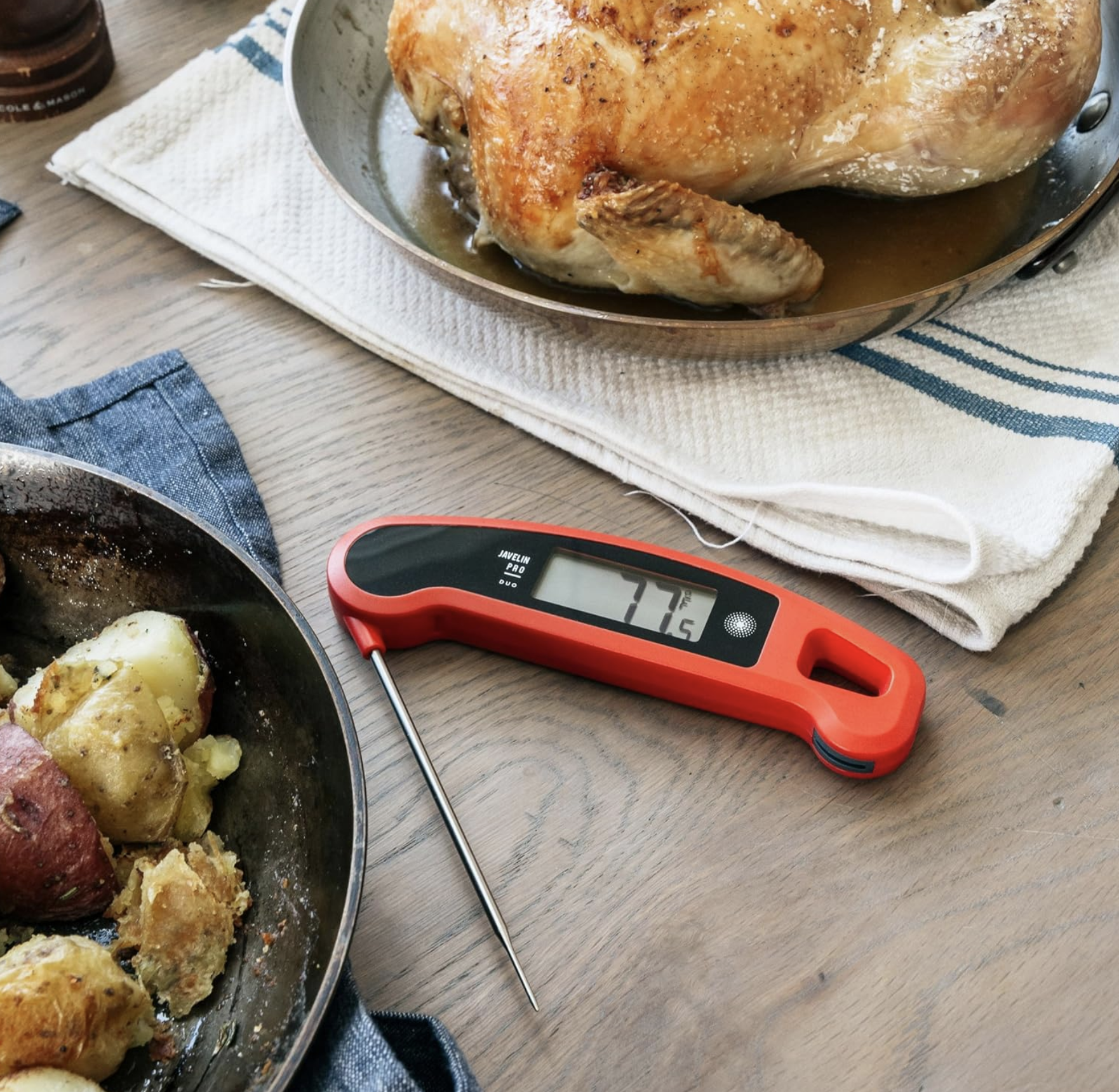
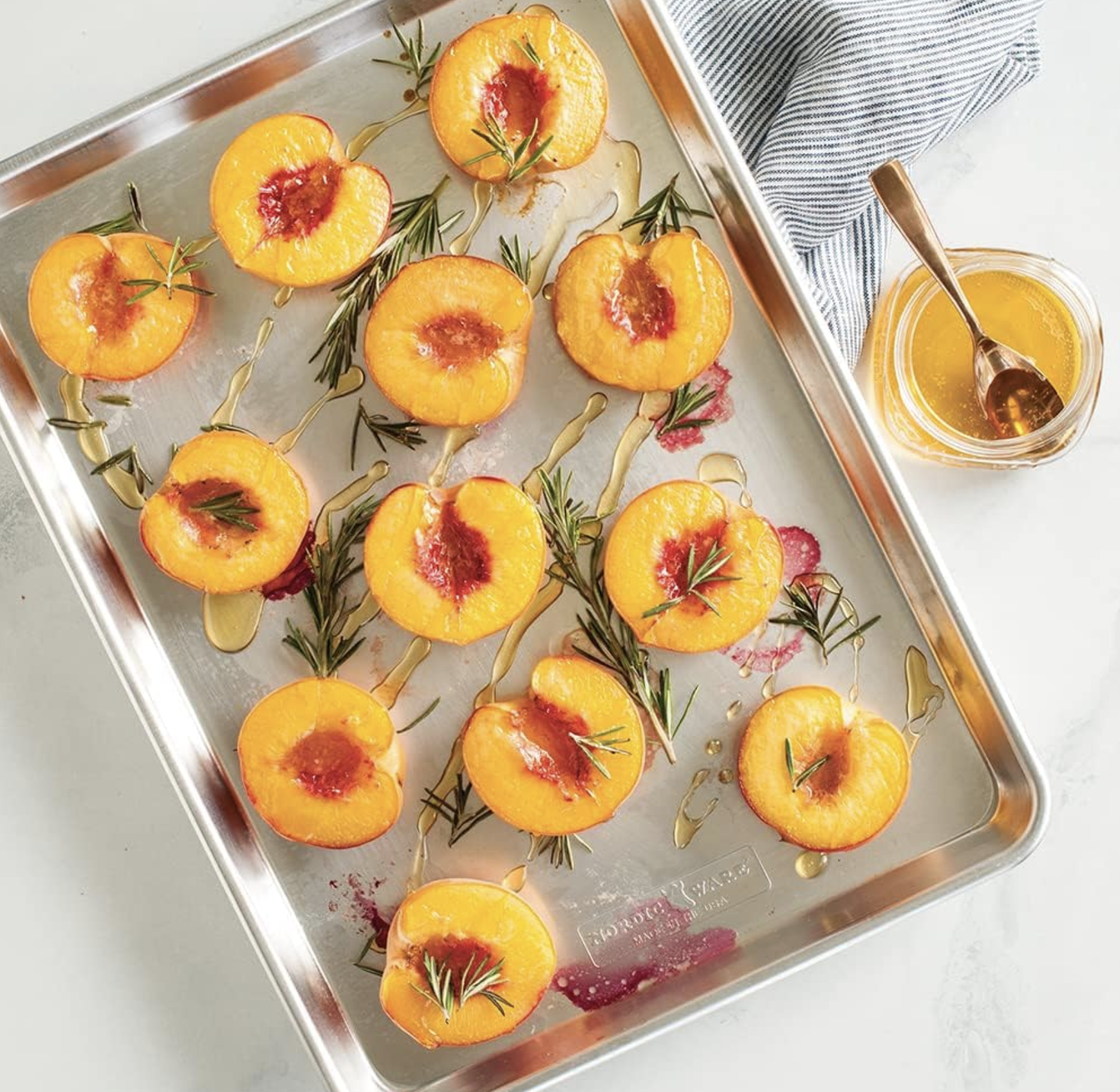
An instant-read thermometer takes the guesswork out of doneness. Insert it into the center of the potato and look for 205°F. A quality sheet pan (with a wire rack) provides the baking surface you need for all-around crispness.
Frequently Asked Questions
Not strictly, but it's smart insurance. Most potatoes won't explode even without holes, but the occasional one does. Piercing takes seconds and prevents the small chance of a messy oven disaster. Use a fork to poke 6-10 holes around the potato. The holes don't affect texture or moisture retention in any noticeable way.
Think of It Like Bread: From a science perspective, a baked potato has more in common with a loaf of bread than with roasted vegetables. Both are starch-driven. Both depend on gelatinization. Both have a crumb structure that matters. Both form a crust through Maillard browning. If you've ever cared about bread texture, the same principles apply here.
Great baked potatoes come down to moisture control. The skin regulates how steam escapes during cooking. Foil traps that steam and ruins everything: gummy interior, soft skin. Dry baking lets moisture leave gradually, giving you a fluffy interior and crispy, golden skin.
The techniques are simple: bake uncovered at 400-450°F, use a rack for air circulation, and pierce a few holes for safety. Check for 205°F internal temperature and split immediately to release steam. High-starch russets give you the best results.
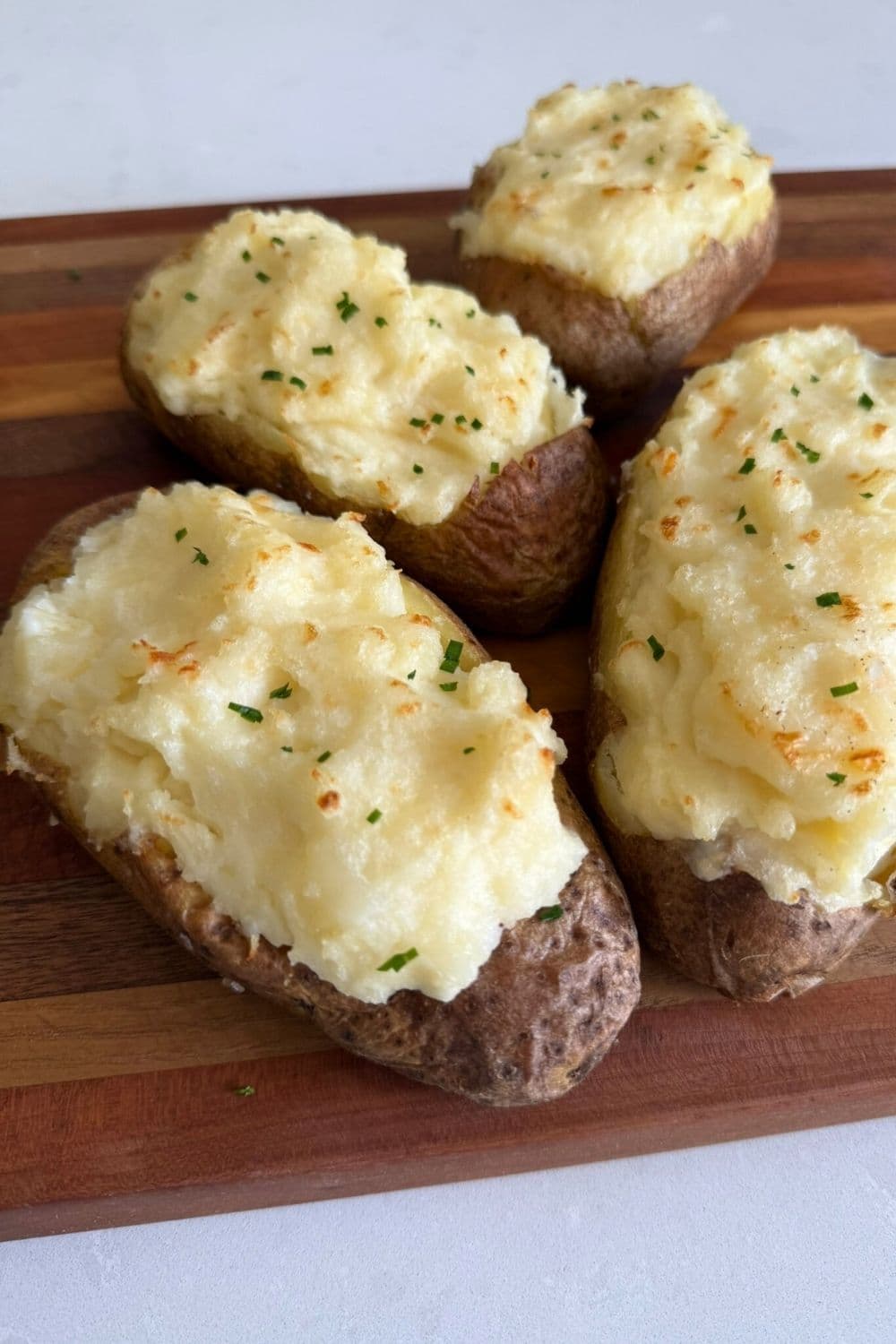
Once you understand the science, you'll never wrap a potato in foil again. Ready to put it into practice? Try our Twice-Baked Potatoes recipe, which builds on everything in this guide.