
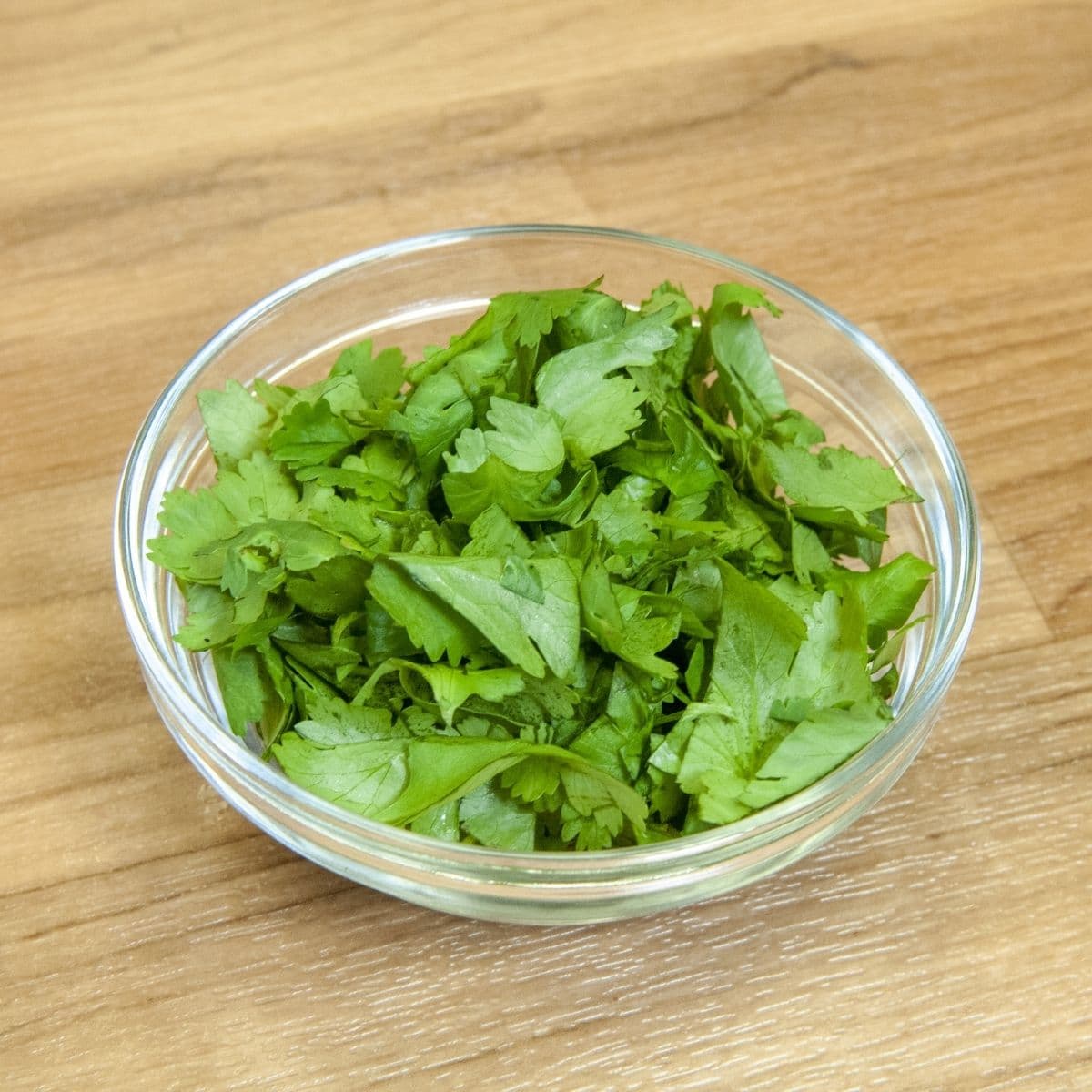
You've heard the advice a hundred times: keep trying cilantro and you'll eventually learn to like it. That advice is wrong. If cilantro tastes like soap to you, repeated exposure alone rarely changes the chemistry happening in your nose.
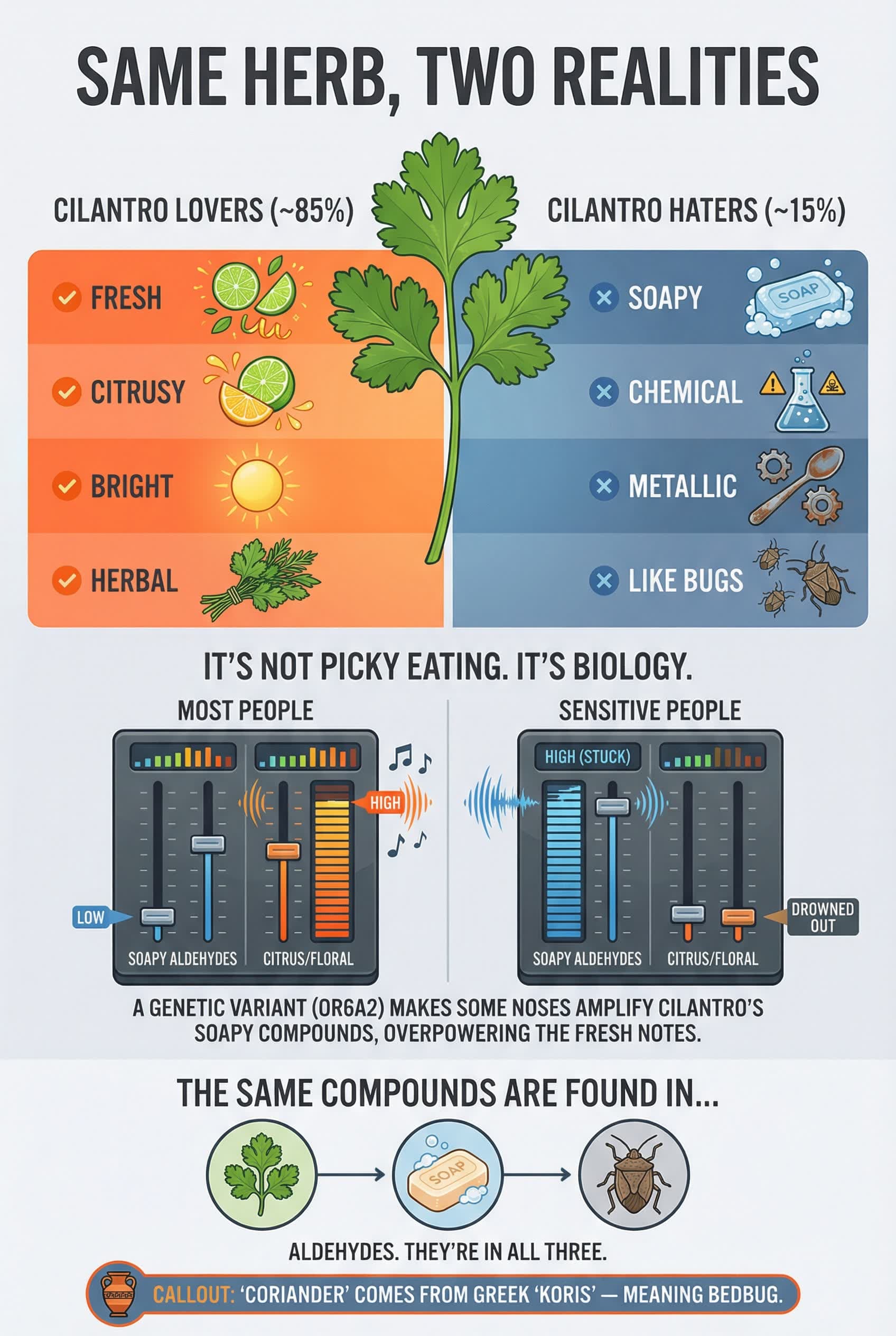
Here's what most cilantro advice misses: for roughly 10-15% of people, the soapy taste isn't a preference problem. It's a perception problem. A genetic variation in the olfactory receptor OR6A2 makes certain people highly sensitive to cilantro's soapy aldehyde compounds, which overwhelm the bright, citrusy notes that others enjoy. Julia Child famously declared she'd pick cilantro out of any dish and throw it on the floor. She wasn't being dramatic. She was perceiving something you're not.
This matters if you cook for others. At a dinner party of ten, odds are good that at least one person quietly pushes the cilantro dish aside. They probably won't complain. They'll just eat less. Understanding why cilantro divides the table, and what actually works (instead of "just keep trying"), helps you cook smarter for mixed crowds.
What Makes Cilantro Taste Like Soap
The soapy flavor isn't imagined. It's chemistry.
Cilantro leaves contain compounds called aldehydes, the same family of molecules used to scent soaps and detergents. Two specific aldehydes, (E)-2-decenal and (E)-2-dodecenal, have a distinctly soapy character. For most people, cilantro's other aromatic compounds (including linalool, which smells floral and citrusy) dominate the experience. But some people have a genetic variation in an olfactory receptor gene called OR6A2 that makes those soapy aldehydes hit hard.
Think of it like a volume knob. Most noses turn the soapy notes down while amplifying the citrusy, fresh notes. But for roughly 10-15% of people, that knob is stuck on high for the soapy compounds, drowning out everything pleasant. They're not being dramatic. They're literally perceiving something you're not.
The Wrong Advice About Cilantro
Most cilantro advice falls into two camps. Neither is helpful.
"Just keep trying it." This works for acquired tastes like olives, coffee, or blue cheese. Those are flavor preferences that can shift with exposure. But cilantro aversion tied to OR6A2 isn't a preference. It's perception. Repeated exposure to something that genuinely tastes like dish soap doesn't train your brain to like it. It trains you to avoid the host's cooking.
"You'll get used to it eventually." Some people do report reduced sensitivity over time, but the research suggests this has more to do with how cilantro is prepared (cooked, blended, paired with fat) than with raw exposure. The change isn't in the person. It's in the dish.
The better approach: stop trying to convert cilantro haters and start cooking around them.
How Cilantro Behaves in Food
Not all cilantro preparations affect sensitive eaters equally. Understanding how the herb behaves in different contexts gives you more control.
Raw vs. Cooked: Raw cilantro delivers the most intense hit of those soapy aldehydes. Cooking breaks down some of the volatile compounds, mellowing the flavor. Cilantro added at the end of cooking (as a finishing herb) will be stronger than cilantro simmered into a sauce.
Whole Leaves vs. Chopped or Blended: Large, visible leaves on top of a dish are the worst-case scenario for cilantro haters. Each bite delivers an unpleasant burst. Finely chopped or blended cilantro distributes more evenly and integrates with other flavors, making the soapy notes less jarring. A cilantro-sensitive person might tolerate a blended green sauce better than a sprinkle of whole leaves.
Stems vs. Leaves: Cilantro stems contain the same aromatic compounds as leaves. Some sensitive eaters report that stems trigger the soapy taste more intensely, though this varies.
Paired with Fat and Acid: Fat can coat and mute aromatic compounds. Acid (like lime juice) adds competing bright notes that can help balance cilantro's aldehydes. A cilantro-heavy salsa with plenty of lime and a drizzle of oil may be more tolerable than plain cilantro leaves.
What I've Learned Cooking for Groups
After years of hosting dinners and potlucks, I've learned to watch for the quiet push-away. It happens more often than you'd expect. Someone takes one bite of the cilantro-heavy dish, sets down their fork, and reaches for something else. They never complain. They just stop eating.
Now I offer cilantro on the side by default. It's such a simple fix that I'm surprised more recipes don't suggest it. The dish tastes exactly the same to cilantro lovers, and the cilantro-sensitive guests actually eat.
The other thing I've noticed: blending works better than garnishing. When cilantro is pureed into a sauce or dressing, even sensitive guests often don't notice it. But scatter whole leaves on top? That's when people start picking them off.
How to Cook with Cilantro for Mixed Crowds
When you're cooking for a group and aren't sure who can handle cilantro, these strategies minimize risk without sacrificing flavor.
Blend it, don't garnish with it. In sauces, dressings, and marinades, blended cilantro integrates with other flavors rather than standing alone. A cilantro-lime vinaigrette is easier for sensitive eaters to tolerate than whole cilantro leaves scattered on top.
Add it early rather than late. Cilantro added during cooking loses some of its punch as the volatile aldehydes break down. Cilantro added as a finishing touch delivers maximum intensity.
Offer it on the side. For tacos, grain bowls, soups, and similar dishes, serve chopped cilantro in a small bowl alongside the meal. Let each person add their own. This simple move eliminates the problem entirely.
Pair it with lime and fat. If you're using cilantro in a dish, make sure there's plenty of acid (lime, lemon, vinegar) and some fat (oil, avocado, sour cream) to help balance the aldehydes.
Ask first. For dinner parties or gatherings, a quick "anyone here not a fan of cilantro?" before cooking saves everyone the awkwardness later.
Smart Substitutes That Actually Work
Sometimes you need to skip cilantro entirely. These substitutes work in different contexts.
Flat-leaf parsley: The closest visual match. Parsley provides fresh, green color and mild herbal flavor without polarizing anyone. It's the safest swap for most recipes. Use it in equal amounts.
Fresh dill: Bright and slightly citrusy. Works well in yogurt-based sauces, fish dishes, and anywhere you want freshness without cilantro's specific flavor profile.
Fresh basil: Especially Thai basil in Southeast Asian dishes. Not a direct swap, but provides herbal complexity that fills a similar role.
Chives: For garnish purposes, chives add color and mild onion flavor. They won't replicate cilantro's taste, but they give a dish that finished, topped look.
The honest truth: No substitute perfectly replicates cilantro's citrusy, peppery freshness. These alternatives give you options, but they create a different flavor profile rather than an exact match. That's usually fine. The dish will still be delicious.
When to Skip Cilantro and When It's Essential
Some dishes rely on cilantro so heavily that removing it fundamentally changes the character. Others treat it as an optional garnish.
Cilantro is structural in:
- Thai green curry paste
- Mexican salsa verde
- Vietnamese pho (traditional garnish)
- Indian chutneys and raitas
- Chimichurri
In these dishes, skipping cilantro isn't just removing a garnish. It's altering the core flavor. Consider making an alternative version for sensitive eaters, or choosing a different dish entirely.
Cilantro is optional in:
- Tacos (offer on the side)
- Rice and grain bowls (offer on the side)
- Most salsas (like our Garden Fresh Salsa, where it's an optional add-in)
- Guacamole (purists may disagree, but it works without)
- Noodle dishes (garnish, not foundation)
In these dishes, you can skip cilantro entirely or offer it on the side without fundamentally changing what you're serving.
Frequently Asked Questions
Sometimes, but not in the way most advice suggests. Repeated exposure to raw cilantro rarely converts someone with strong OR6A2 sensitivity. What can help: encountering cilantro in cooked or blended preparations where the soapy aldehydes are muted. Over time, some people find they tolerate it better in certain contexts. But for people with strong genetic sensitivity, the aversion may never fully go away. There's no shame in that. It's biology, not stubbornness.
Cilantro's divisiveness isn't about picky eating or imagination. It's about real genetic and chemical differences in how people perceive the same herb. Some noses amplify cilantro's citrusy brightness while others get stuck on its soapy aldehydes.
The fix isn't to lecture your guests about acquiring the taste. It's to cook around the problem: blend cilantro into sauces rather than scattering it on top. Offer it on the side when you're unsure. Have parsley ready as a swap. And when you're cooking for yourself? Use as much or as little as you like.
Ready to put this knowledge to use? Our Garden Fresh Salsa makes cilantro an optional add-in, so everyone at the table can customize to their taste.