
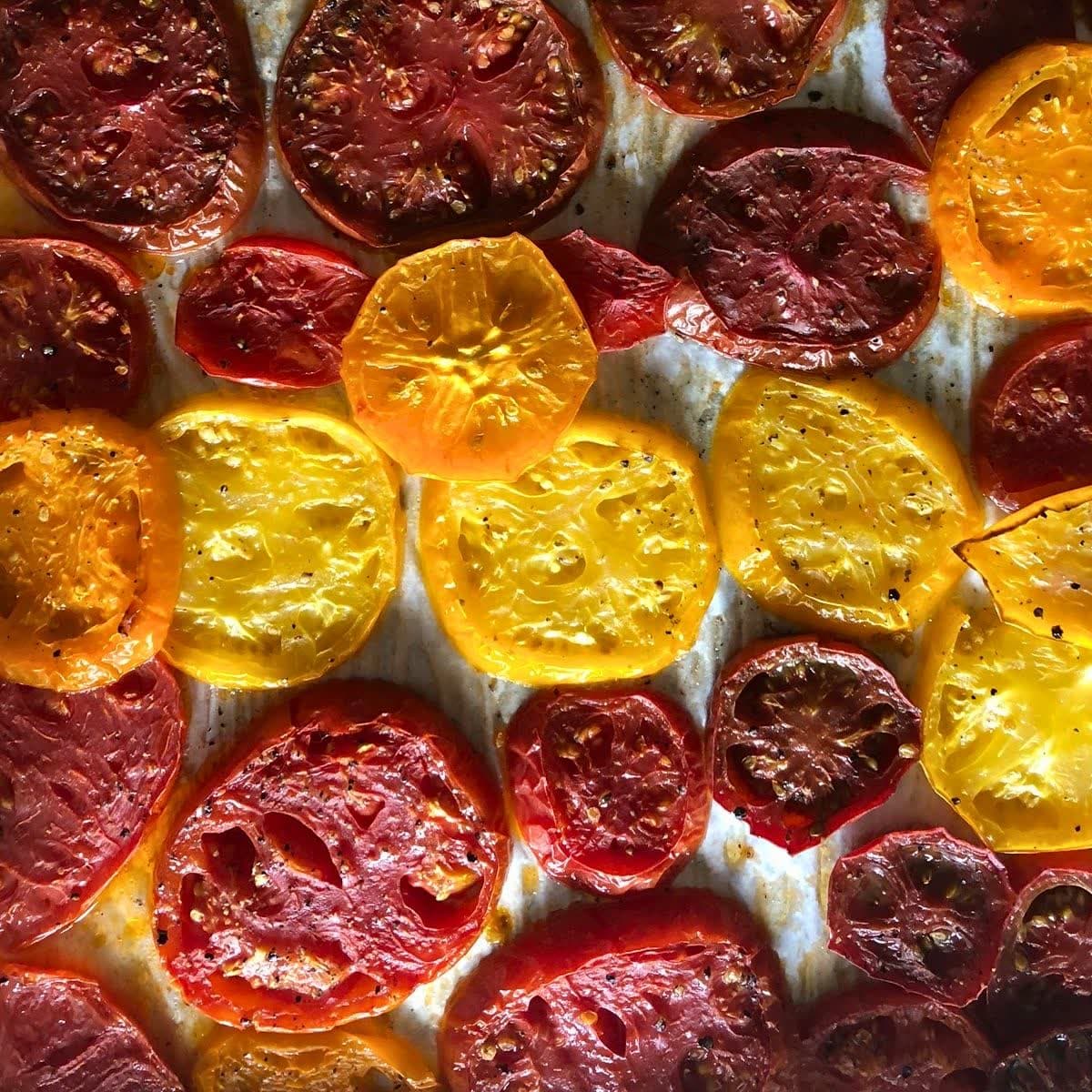
Raw tomatoes are bright, acidic, and refreshing. Roasted tomatoes are something else entirely: deep, sweet, savory, almost meaty in their intensity. The transformation is dramatic, and it's not just in your head. Real chemistry is at work, changing both the flavor and the nutritional value of this humble fruit.
What makes roasting so powerful? Three separate reactions happen when tomatoes meet high heat, each one building flavor in a different way. Understanding these reactions helps you roast smarter, whether you're making a quick appetizer or putting up tomatoes for winter. And there's a bonus: that richly roasted tomato isn't just tastier. It's actually better for you than a raw one.
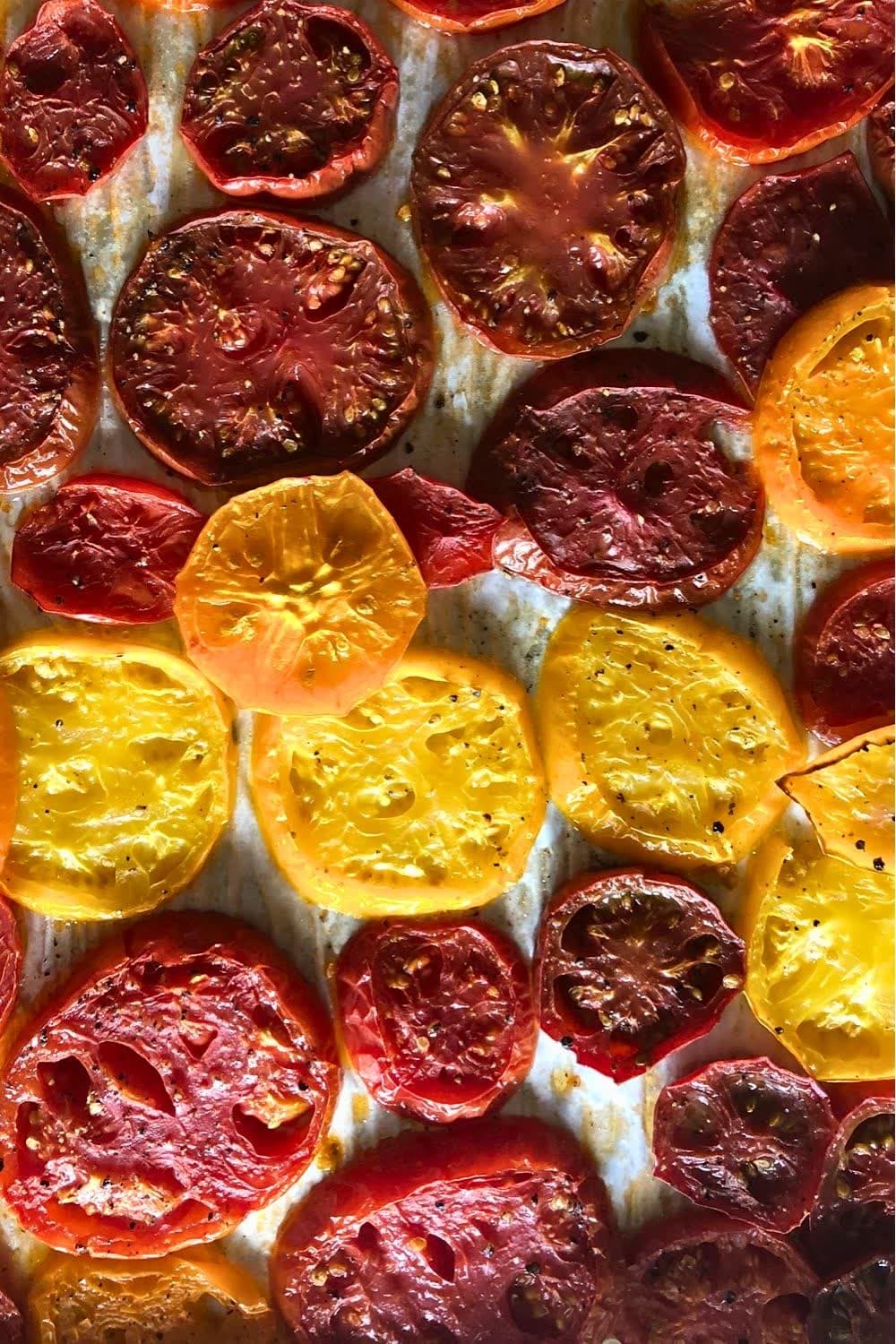
Why Roasted Tomatoes Taste So Much Better
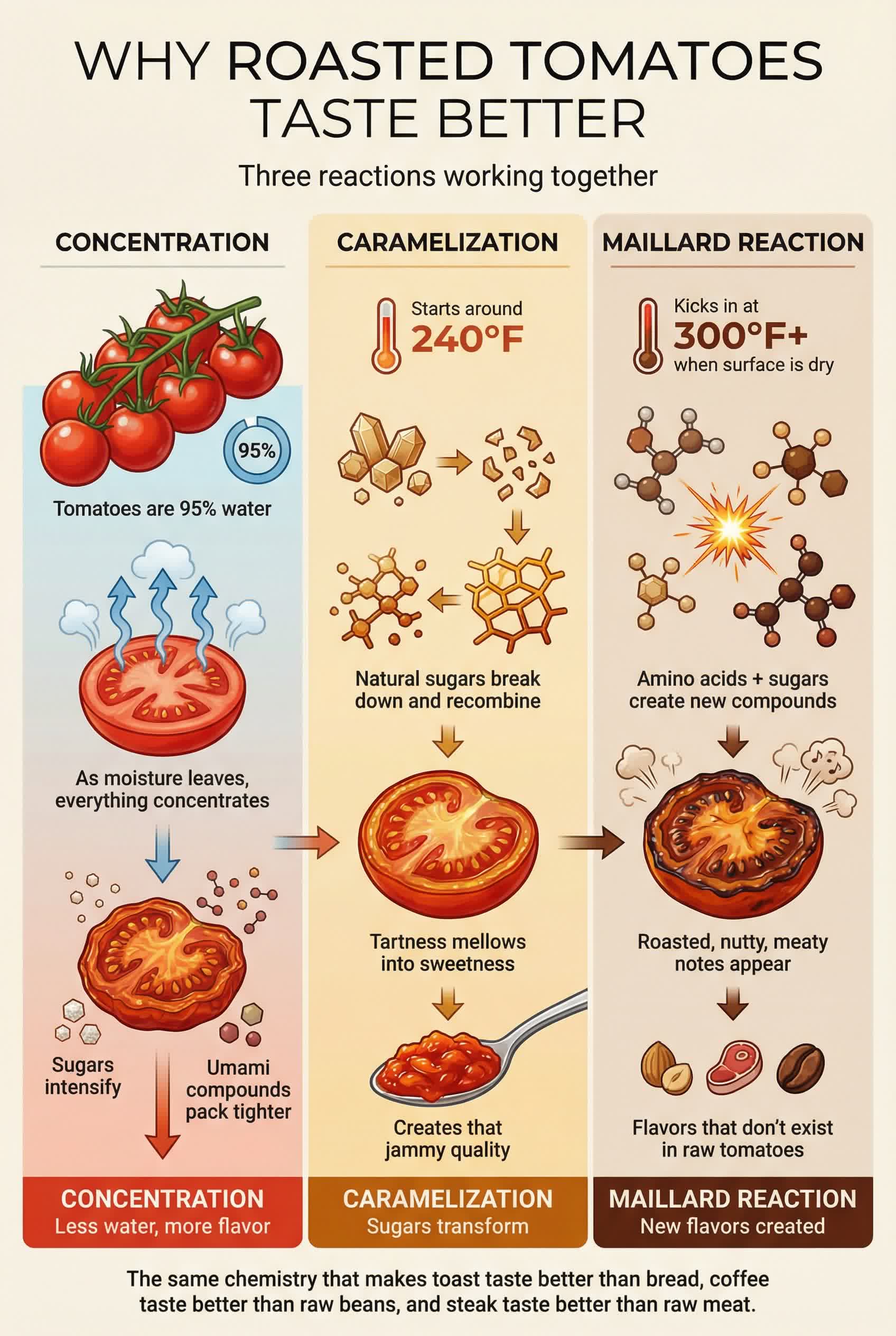
The flavor transformation isn't one thing. It's three separate chemical reactions working together.
1. Concentration: Less Water, More Everything
Tomatoes are 95% water. When you roast them, that moisture evaporates, leaving behind concentrated sugars, acids, and glutamate (the amino acid responsible for umami). Tomatoes contain unusually high glutamate for a fruit, about 0.3% by weight. As water leaves, that savory concentration climbs. Add salt, and the effect intensifies further.
2. Caramelization: Natural Sugars Transform
Around 240°F, natural sugars break down and recombine into new compounds. This creates that jammy, slightly sweet quality in slow-roasted tomatoes. Caramelization reduces tartness while adding depth, turning bright, acidic fruit into something richer and more complex.
3. Maillard Reaction: The Flavor Explosion
Above 300°F, once the surface dries out, the Maillard reaction kicks in. Amino acids react with sugars to create hundreds of new flavor compounds: pyrazines (roasted, nutty notes) and furans (meaty, caramel undertones). These molecules don't exist in raw tomatoes. They're created only through heat.
The Umami Multiplier
When roasted tomatoes pair with meat or fish, something magical happens. Tomatoes provide glutamate; meat provides nucleotides. Together, they multiply rather than add, creating a synergistic umami effect far more intense than either alone. This is why roasted tomatoes elevate braised meats and why a burger with roasted tomatoes tastes more satisfying.
How to Roast Tomatoes: Two Approaches
The method you choose depends on what you want the final result to be.
Low and Slow (250-325°F, 1-2 hours)
Best for: Jam-like texture, intense sweetness, sauces, spreading on toast
Tomato choice: Roma, plum, or any meaty variety with fewer seeds and less water
What happens: Long, gentle heat draws out moisture slowly. Caramelization builds gradually. The tomatoes collapse into concentrated, almost candy-like gems with deep sweetness and rich color.
Result: Soft, spreadable, intensely flavored tomatoes perfect for pasta sauce, bruschetta, or eating straight off the pan.
High and Fast (400°F+, 20-30 min)
Best for: Charred edges, fresh-roasted flavor, toppings, appetizers
Tomato choice: Cherry, grape, or halved larger tomatoes that roast quickly
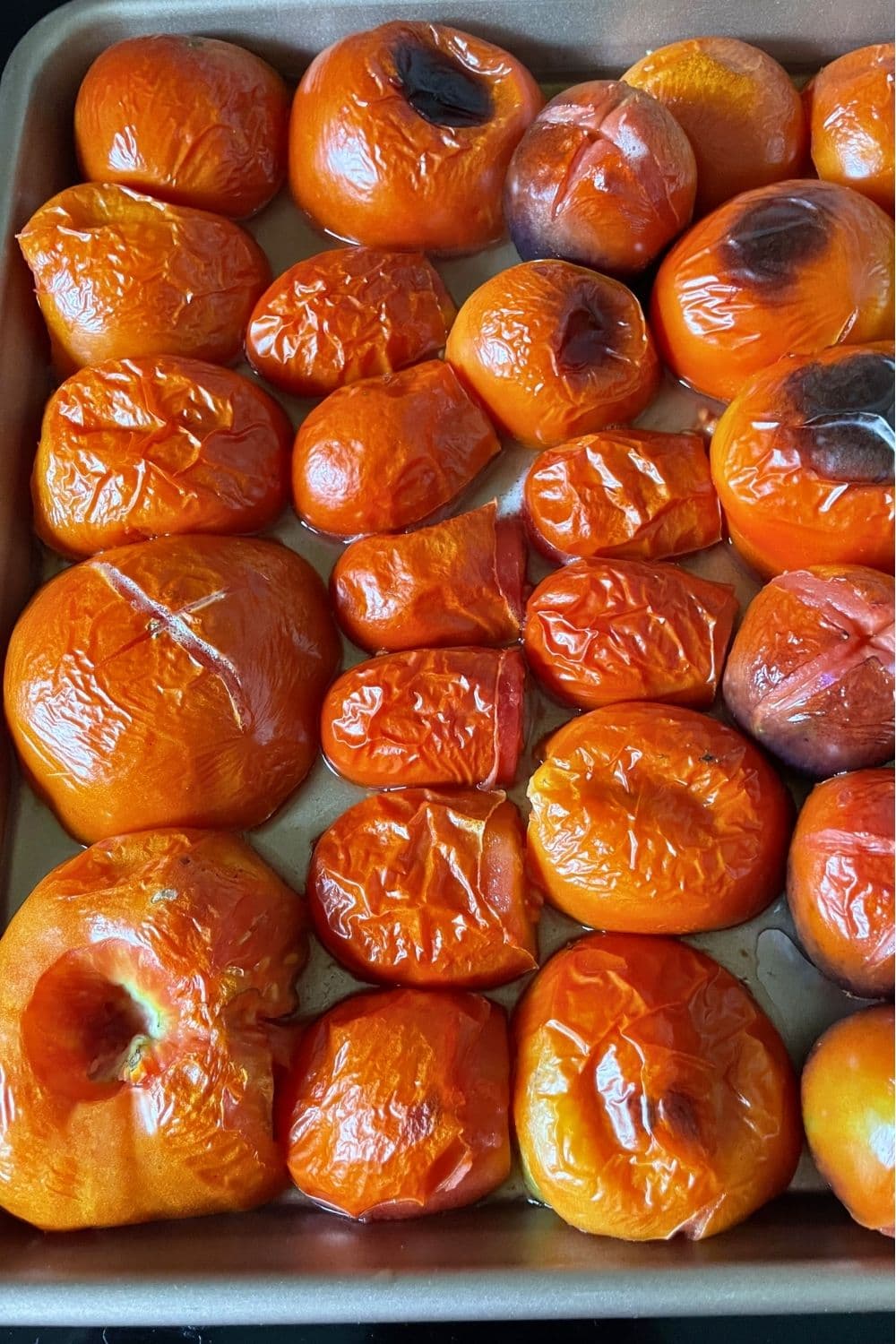
What happens: Rapid surface drying triggers the Maillard reaction quickly. The tomatoes blister and char at the edges while staying relatively intact inside.
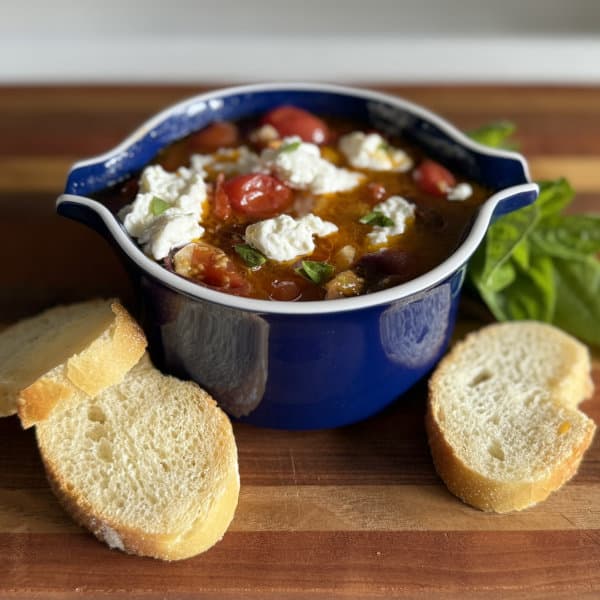
Result: Blistered, slightly collapsed tomatoes with smoky edges and bright, concentrated flavor. Perfect for our Roasted Tomato and Burrata Dip.
The Olive Oil Question
Should you coat tomatoes in olive oil before roasting? Yes, for several reasons.
First, oil conducts heat more evenly across the surface, helping tomatoes roast uniformly. Second, oil helps herbs and aromatics (thyme, garlic, oregano) infuse into the tomatoes as they cook. Third, and most importantly for nutrition, fat dramatically increases how much lycopene your body can absorb. More on that below.
Don't be shy with the oil. A generous coating improves both flavor and nutrition.
Signs of Doneness
Roasted tomatoes are ready when:
- Edges are caramelized and slightly darkened
- Tomatoes have collapsed but aren't dried out
- Color has deepened to a richer red
- Juices have thickened and become syrupy
For high-heat roasting, some charring at the edges is desirable. For low-and-slow, look for that jammy, collapsed texture without any burning.
The Health Bonus: Why Cooked Tomatoes Are More Nutritious
Here's the counterintuitive truth: cooked tomatoes are actually better for you than raw ones.
Lycopene Bioavailability
Lycopene, the antioxidant that gives tomatoes their red color, is linked to reduced risk of heart disease and certain cancers. But your body can't absorb it well from raw tomatoes. In raw form, lycopene is locked inside rigid cell walls. Heat breaks those walls down and converts lycopene to a form that's 2.5 times more bioavailable. Cornell research found cooking tomatoes for 30 minutes increased absorbable lycopene by 164%.
The Fat Factor
Lycopene is fat-soluble. Without fat, your body absorbs very little. Tomatoes cooked in olive oil increased plasma lycopene by 82% compared to tomatoes cooked without oil. That generous drizzle before roasting isn't just about flavor.
The Trade-Off
Cooking reduces vitamin C by 10-29%, but total antioxidant activity increases. For most health markers, the net benefit favors cooking. The Italian grandmother simmering tomatoes in olive oil for hours? She was practicing nutritional science before we had a name for it.
Frequently Asked Questions
Yes, but they're already cooked, so you're adding caramelization and Maillard reaction rather than the full transformation. Drain canned tomatoes well before roasting to remove excess liquid. They'll develop charred edges and concentrated flavor, but the texture will be softer than fresh roasted tomatoes.
Roasting tomatoes isn't just cooking. It's chemistry in action: water evaporates, sugars caramelize, amino acids react with heat to create entirely new flavor compounds. The result is a tomato that tastes more savory, more sweet, and more complex than anything you could achieve with raw fruit.
And that richly roasted tomato isn't just tastier. It delivers more bioavailable lycopene, especially when you roast with olive oil. The Italian grandmothers knew something science would later confirm: slow-cooked tomatoes in plenty of fat are good for you.
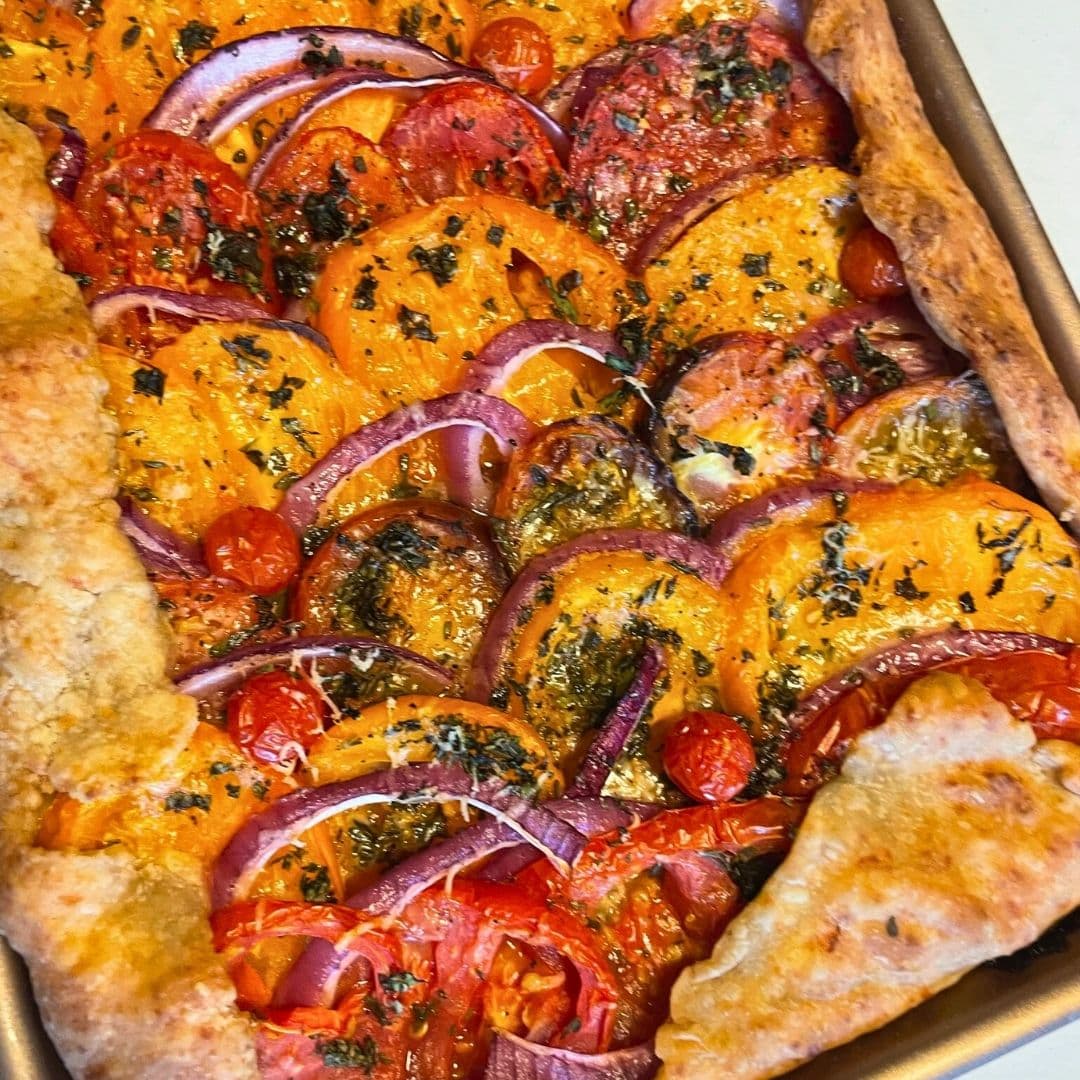
Ready to put this science to work? Try our Roasted Tomato and Burrata Dip for high-heat blistered perfection, or the Rosemary Tomato Galette for a showcase of caramelized summer tomatoes. Either way, you'll taste the transformation.