
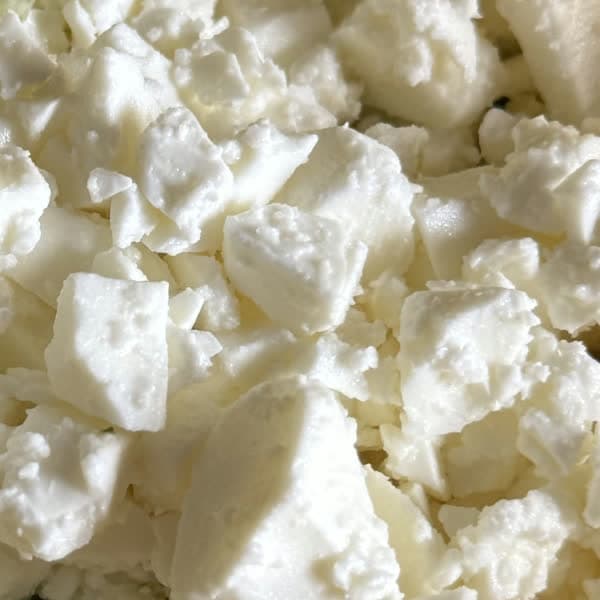
Have you ever bought feta from the grocery store only to find it bland, rubbery, or swimming in weird brine? You're not alone. The supermarket feta aisle can be overwhelming: crumbled vs block, Greek vs Bulgarian, brine-packed vs vacuum-sealed. With so many options and wildly different price points, how do you know which feta is worth bringing home?
Here's the good news: choosing quality feta doesn't require a PhD in cheese. Once you know what to look for—milk type, origin, packaging—you'll consistently bring home feta that's tangy, creamy, and worth the price. In this guide, we'll break down the types of feta, what to look for when buying, and how to store it so it stays fresh for weeks.
Plus, we'll show you a fresh, easy recipe that puts your feta front and center.
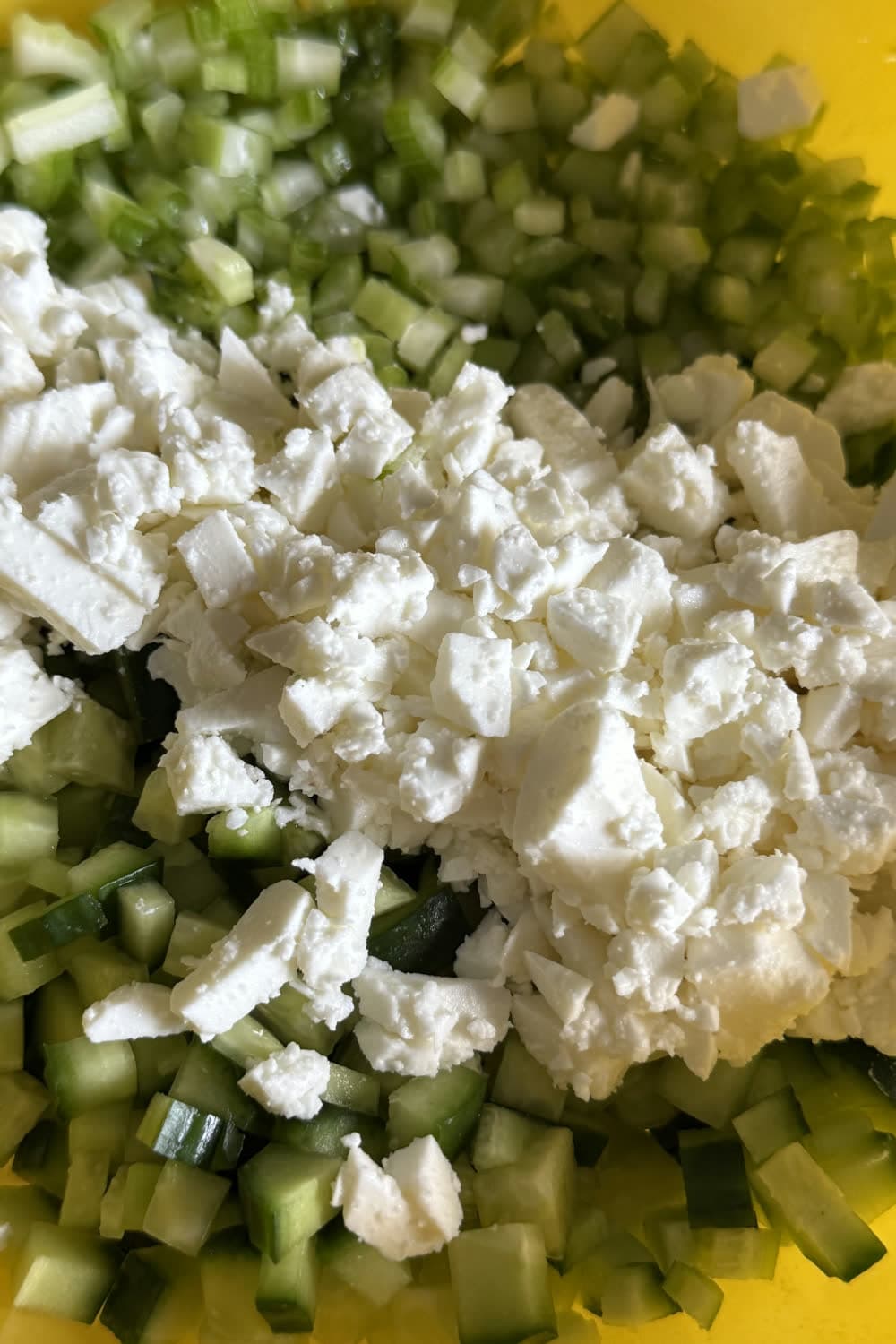
What Is Feta?
Feta is a traditional Greek cheese with a rich history dating back thousands of years. Authentic Greek feta has PDO (Protected Designation of Origin) status in the European Union, meaning only cheese made in specific regions of Greece using traditional methods can legally be called "feta" in Europe. It's made from sheep's milk or a blend of sheep and goat milk (at least 70% sheep's milk), then brined to develop its signature tangy, salty flavor and crumbly texture.
What makes feta special is its versatility. It's equally at home crumbled over a fresh Greek salad, baked into savory pastries, grilled in foil with herbs, or blended into creamy dips. The best feta strikes a balance: tangy but not overly salty, creamy but still crumbly, rich but not heavy. That distinctive sharp, salty bite comes from both the sheep's milk and the brining process, which also preserves the cheese and gives it a long shelf life.
Understanding what authentic feta is helps you recognize quality when you're shopping. Not all cheese labeled "feta" is created equal, and knowing the difference will transform your cooking.
Put It to Use: Fresh Cucumber Celery Feta Dip
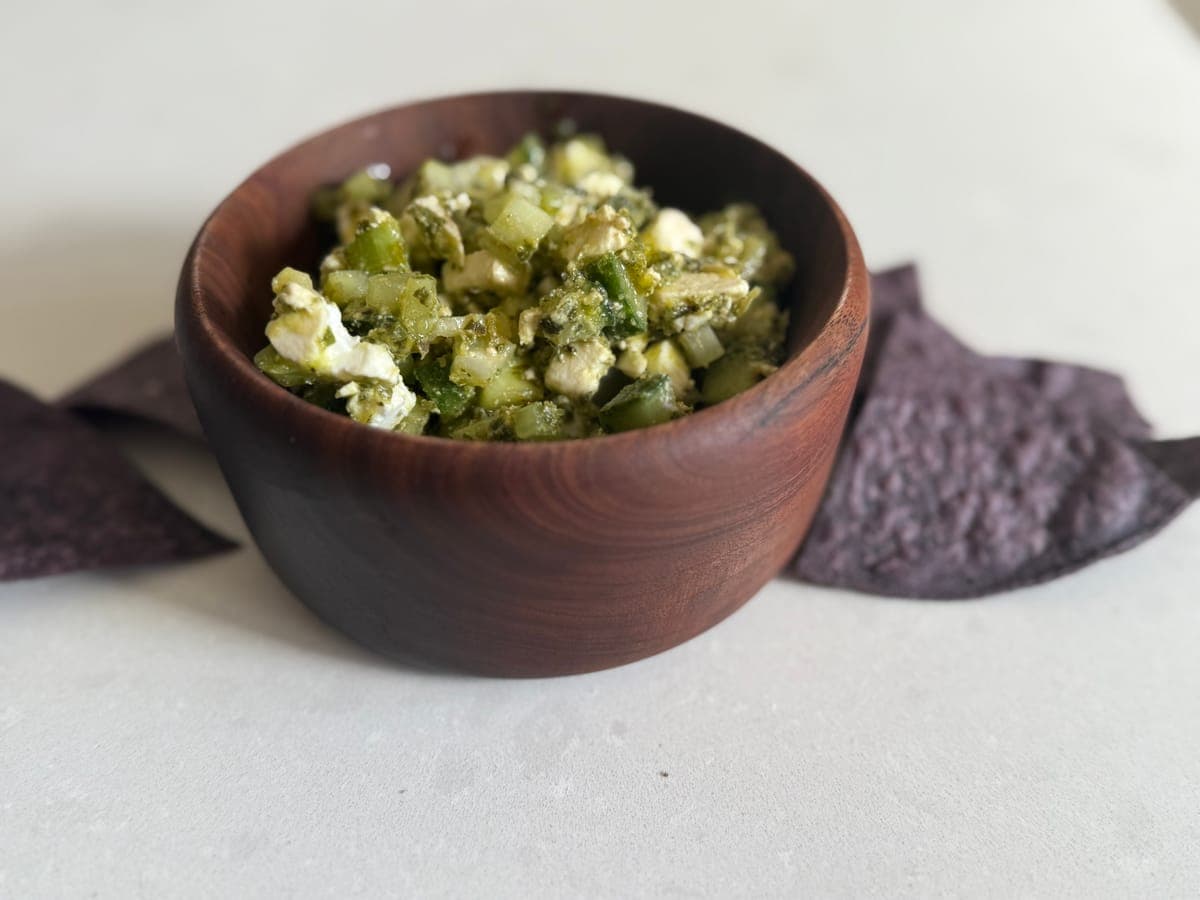
Want to taste the difference quality feta makes? This fresh Mediterranean dip showcases feta's bright, tangy flavor:
This simple recipe lets good feta shine. The fresh, crunchy vegetables and bright basil vinaigrette complement the feta without overwhelming it. The better your feta, the better your dip. Here's how to choose wisely.
Types of Feta: Know Your Options
Not all feta comes from Greece, and not all feta-style cheeses are made the same way. Understanding the regional differences helps you choose the right feta for your needs and budget.
Greek Feta (PDO)
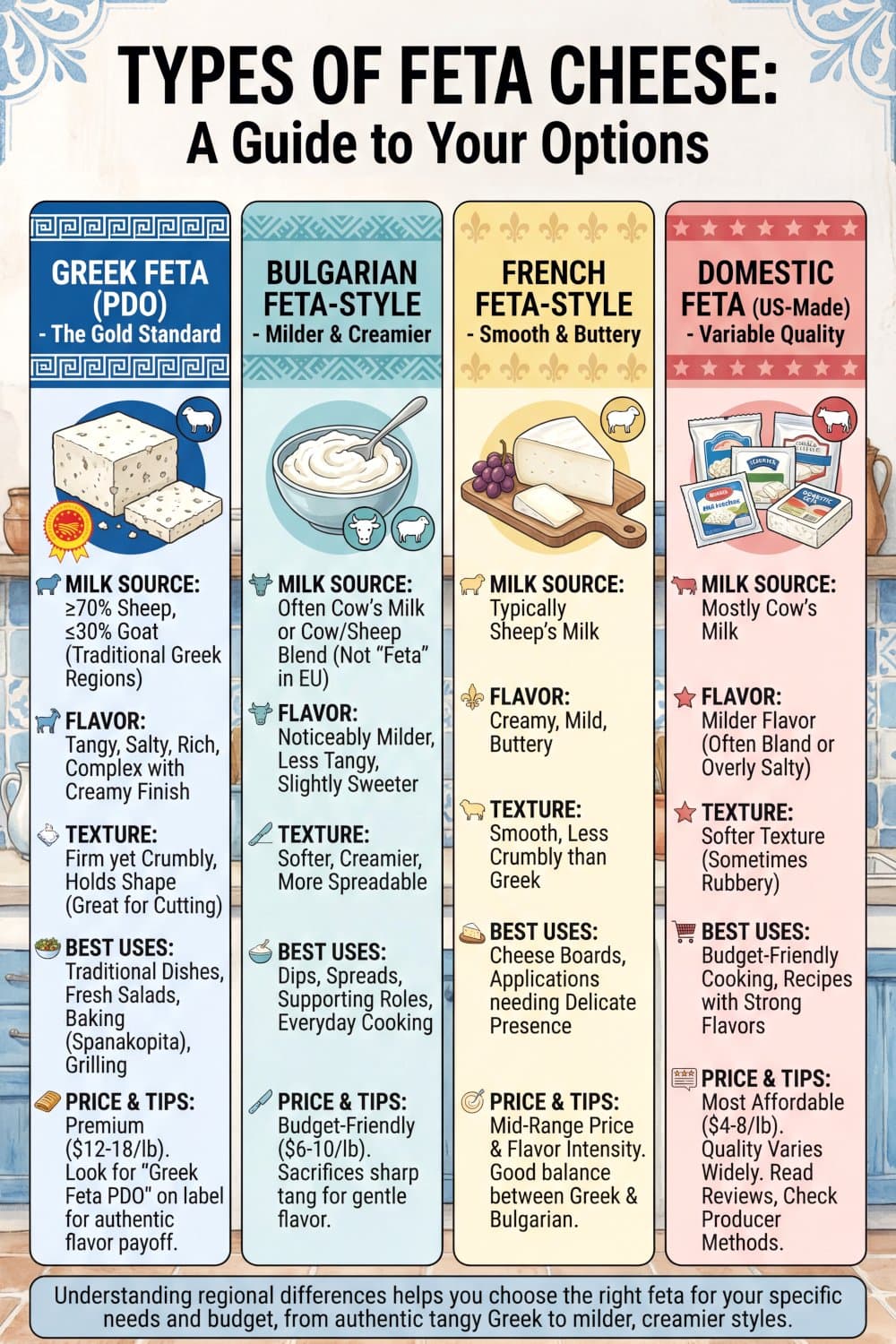
Authentic Greek feta with PDO designation is the gold standard. It's made from at least 70% sheep's milk with up to 30% goat's milk, following traditional production methods in designated Greek regions. The flavor is tangy, salty, rich, and complex with a creamy finish. The texture is firm yet crumbly—it holds its shape well when you cut it but crumbles beautifully when you want it to.
Greek feta works best in traditional Greek dishes, fresh salads, baking (like spanakopita), and even grilling. When shopping, look for "Greek Feta PDO" or "Feta PDO" on the label, along with sheep's milk as the primary ingredient. Expect to pay premium prices ($12-18 per pound), but the flavor payoff is significant.
Bulgarian Feta
Bulgarian feta-style cheese (which can't legally be called "feta" in the EU) is often made from cow's milk or a cow/sheep milk blend. The flavor is noticeably milder, less tangy, and slightly sweeter than Greek feta. The texture is softer, creamier, and more spreadable, making it ideal for dips and spreads where you want a mild, creamy cheese.
Bulgarian feta is perfect for recipes where feta plays a supporting role or when you prefer a gentler flavor. It's often more affordable ($6-10 per pound), making it a budget-friendly option for everyday cooking. Just know that you're sacrificing some of that characteristic sharp tang.
French Feta
French feta-style cheese is typically made from sheep's milk and has a creamy, mild, buttery flavor. The texture is smooth and less crumbly than Greek feta. It works beautifully on cheese boards or in applications where you want a milder, more delicate feta presence. French feta sits somewhere between Greek and Bulgarian in terms of price and flavor intensity.
Domestic Feta (US-Made)
American-made feta varies widely in quality. Most domestic feta is made from cow's milk, which produces a milder flavor and softer texture. Some brands are excellent; others are bland, rubbery, or overly salty. Quality depends heavily on the producer.
Domestic feta works fine for budget-friendly cooking or recipes with strong flavors where the feta isn't the star. If you're buying domestic feta, read reviews, try different brands, and look for ones that use traditional methods and quality milk. Expect to pay $4-8 per pound.
Quick Comparison
Greek Feta PDO
$12-18 per pound
Made from 70% sheep's milk in designated Greek regions using traditional methods. Tangy, salty, rich, and complex flavor with a creamy finish. Firm yet crumbly texture—holds shape when cut but crumbles beautifully.
Best For
Traditional Greek dishes, fresh salads, baking (spanakopita), and grilling. Premium quality with authentic PDO designation.
Bulgarian Feta
$6-10 per pound
Often made from cow's milk or cow/sheep blends. Can't legally be called "feta" in the EU. Noticeably milder, less tangy, and slightly sweeter than Greek feta. Softer, creamier, and more spreadable texture.
Best For
Dips and spreads where you want mild, creamy cheese. Budget-friendly option for everyday cooking.
Domestic Feta
$4-8 per pound
American-made, usually from cow's milk. Quality varies widely by producer. Milder flavor and softer texture than Greek feta. Some brands are excellent; others are bland, rubbery, or overly salty.
Best For
Budget-friendly cooking or recipes with bold flavors where feta plays a supporting role.
What to Look for When Buying Feta
Now that you know the types, here's how to choose the best feta on the shelf.
Read the Label
Milk type matters. Sheep's milk is the gold standard. Sheep/goat blends are traditional and excellent. Cow's milk feta will be milder and less authentic. Check the ingredient list: the first ingredient should be sheep's milk (or sheep/goat milk) if you want traditional flavor.
Look for origin. Greek PDO feta is the most authentic and usually the highest quality. If the label says "Product of Greece" and includes PDO designation, you're getting the real deal.
Keep ingredients simple. Quality feta should contain milk, salt, cultures, and enzymes—that's it. Avoid feta with added stabilizers, excess preservatives, or long ingredient lists. Simpler is better.
Check the Packaging
Brine-packed blocks are best. Feta stored in brine (salt water) stays fresh, moist, and flavorful. The brine protects the cheese from drying out and preserves its tangy bite. This is the traditional storage method and produces the best results.
Vacuum-sealed is convenient but not ideal. Vacuum-sealed feta is easier to transport and store, but it can dry out faster once opened. If you buy vacuum-sealed, plan to use it quickly or transfer it to brine.
Pre-crumbled is convenient but compromised. Pre-crumbled feta often contains anti-caking agents (like cellulose powder) that affect texture and flavor. Crumbling your own feta from a block takes seconds and tastes noticeably better. Save pre-crumbled for emergencies only.
Examine the Cheese
Color: Quality feta should be pure white to slightly ivory. Yellow feta is a red flag—it's either old or made with the wrong type of milk.
Texture: The feta should look firm but not hard. When you press it gently (if possible through the package), it should give slightly but hold its shape. It should appear moist, not dry or cracked.
Smell: Fresh feta smells tangy, slightly salty, and clean. If you can smell it before buying (at a cheese counter, for example), avoid feta that smells sour, ammonia-like, or off.
Taste Test (If Possible)
If you're buying from a cheese counter or specialty shop that offers samples, take advantage:
Flavor: Look for tangy, salty, complex flavor. Good feta should taste bright and interesting, not bland or one-dimensional.
Finish: The aftertaste should be clean and slightly sharp, not bitter or soapy.
Moisture: The texture should be moist and creamy, not soggy or dry.
How to Store Feta
Proper storage extends feta's shelf life and preserves its flavor. Here's how to keep it fresh.
Store in Brine (Best Method)
Brine is the traditional storage method for feta, and it works beautifully. Feta submerged in brine stays moist, flavorful, and fresh for 2-3 weeks in the refrigerator.
If your feta came in brine, save that brine and keep the feta submerged in an airtight container. If your feta didn't come with brine (or you need more), make your own: mix 1 cup water with 1 tablespoon salt, stir until dissolved, and pour over the feta in an airtight container. Make sure the feta is completely submerged.
Wrapped in Plastic (Short-Term)
If you need to store feta for just a few days, wrap it tightly in plastic wrap and place it in an airtight container. This prevents it from drying out and absorbing other flavors from your fridge. Use within one week.
Freezing (Not Recommended)
Freezing feta changes its texture, making it more crumbly and sometimes grainy. If you must freeze feta, cut it into portion-sized pieces, wrap tightly, and freeze for up to 3 months. Thaw in the refrigerator and use in cooked dishes where texture is less critical.
Shelf Life
- Unopened: Check the date on the package (usually 3-6 months from production)
- Opened, stored in brine: 2-3 weeks
- Opened, wrapped without brine: 1 week
- Frozen: Up to 3 months (texture will change)
Essential Tools for Working with Feta
The right tools make prepping feta dishes quick and easy. These are the essentials for recipes like our cucumber celery feta dip:
If you click on links we provide, we may receive compensation.
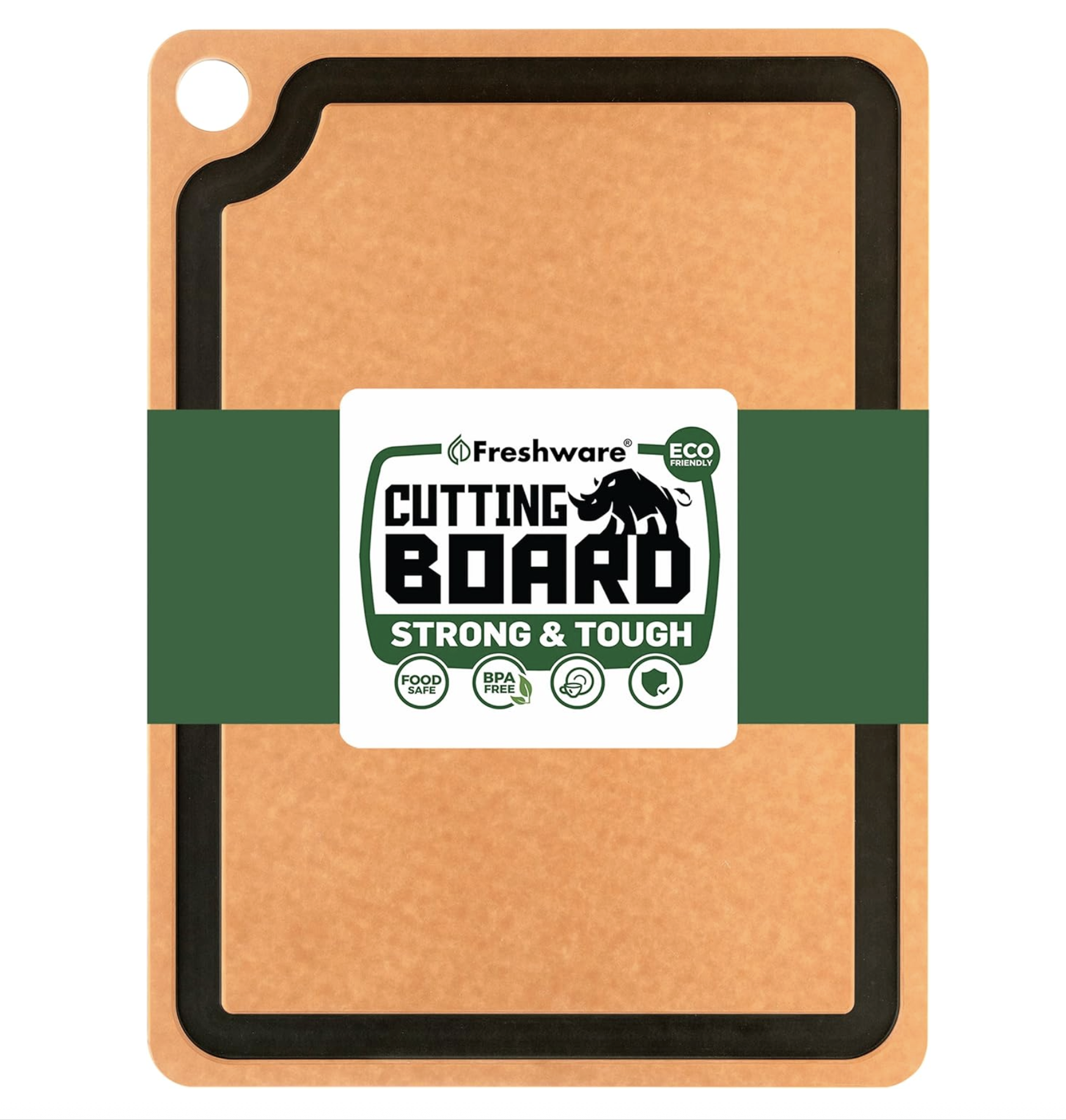
Lightweight Non-Toxic Bamboo Cutting Board
This cutting board is my favorite for everyday prep
BUY ON AMAZON
Stainless Steel Citrus Press
I reach for this sturdy citrus press every time I need fresh lemon or lime juice for marinades, sauces, or that zippy finish in baking.
BUY ON AMAZON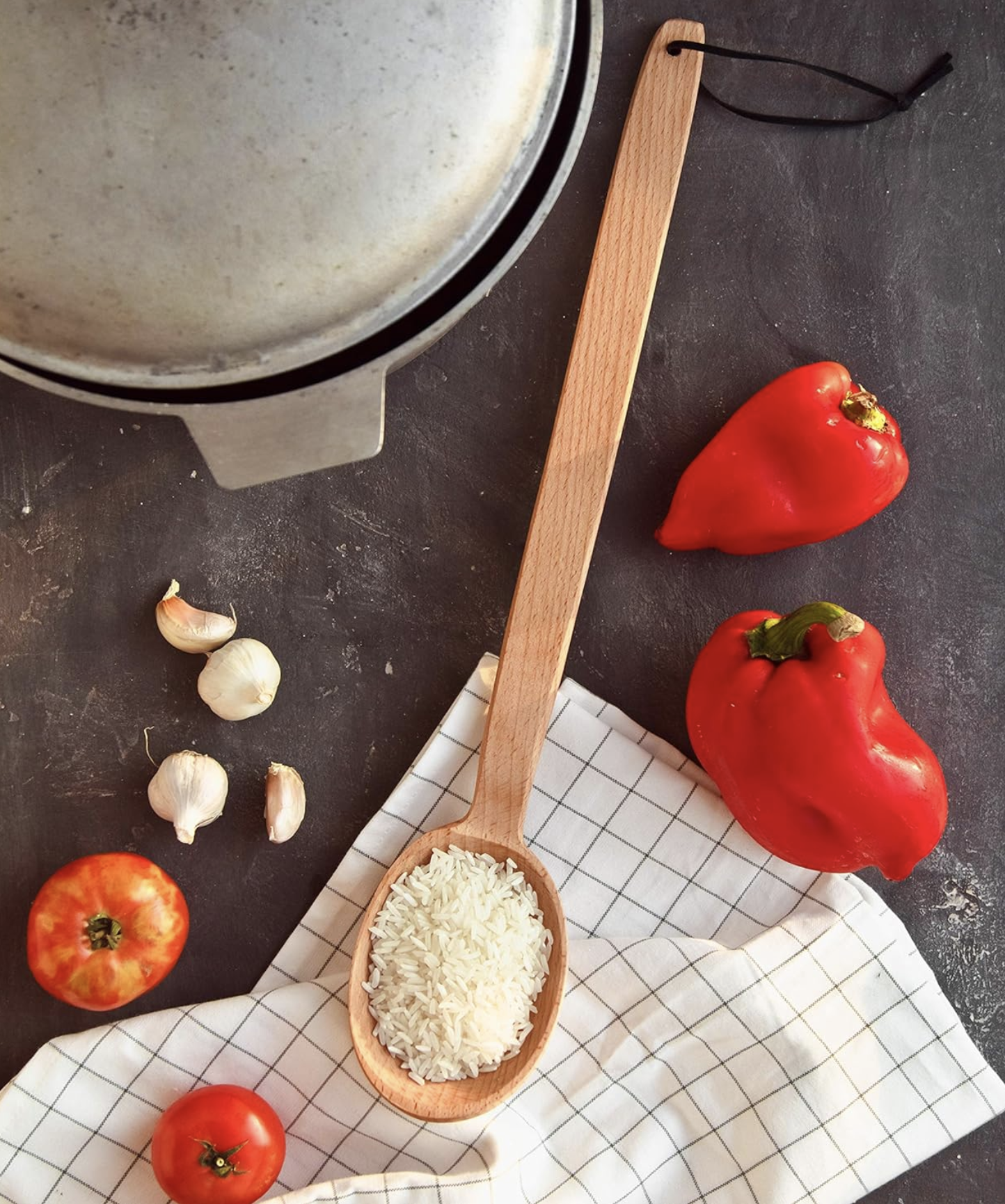
Extra-Long Wooden Spoon
This long-handled wooden spoon is one of my essentials for jam and caramel making.
BUY ON AMAZONA good cutting board provides a clean, non-porous surface for dicing fresh vegetables. A citrus press extracts fresh lemon juice for bright, tangy dressings. And a wooden spoon gently mixes ingredients without breaking up delicate feta chunks.
Best Ways to Use Quality Feta
Once you've found great feta, here's how to make the most of it:
- Fresh salads - Classic Greek salad, watermelon feta salad, or any green salad that needs a salty, tangy punch
- Mediterranean dips - Like our cucumber celery feta dip, tzatziki variations, or whipped feta spreads
- Baked dishes - Baked feta pasta (the viral TikTok recipe), spanakopita, feta-stuffed chicken
- Grilled - Wrap feta in foil with olive oil, herbs, and lemon, then grill until warm and soft
- Crumbled toppings - Pizza, roasted vegetables, grain bowls, scrambled eggs
Good feta elevates simple ingredients. The better your feta, the better your finished dish.
Frequently Asked Questions
Yes, but expect milder flavor and softer texture. Greek feta has a stronger tang and firmer crumble, which works better in salads and baked dishes where you want distinct chunks of cheese. Domestic feta is fine for dips, spreads, or recipes with bold flavors where the feta plays a supporting role rather than starring.
Conclusion
Choosing good feta doesn't have to be complicated. Look for Greek PDO feta for the most authentic flavor, check the label for sheep's milk and minimal ingredients, and buy brine-packed blocks when possible. The difference in flavor is worth the extra dollar or two.
Once you've found quality feta, store it properly in brine to keep it fresh for weeks. Whether you're making a quick dip, tossing it into a salad, or baking it into a pasta, good feta elevates simple ingredients into something special.
Ready to put your feta knowledge to use? Try our Cucumber Celery Feta Dip for a fresh, crunchy appetizer that showcases everything great feta has to offer. It takes 10 minutes to make and disappears even faster.
Want more ingredient guides and Mediterranean recipes? Subscribe to our newsletter for weekly tips, techniques, and tested recipes delivered to your inbox.