
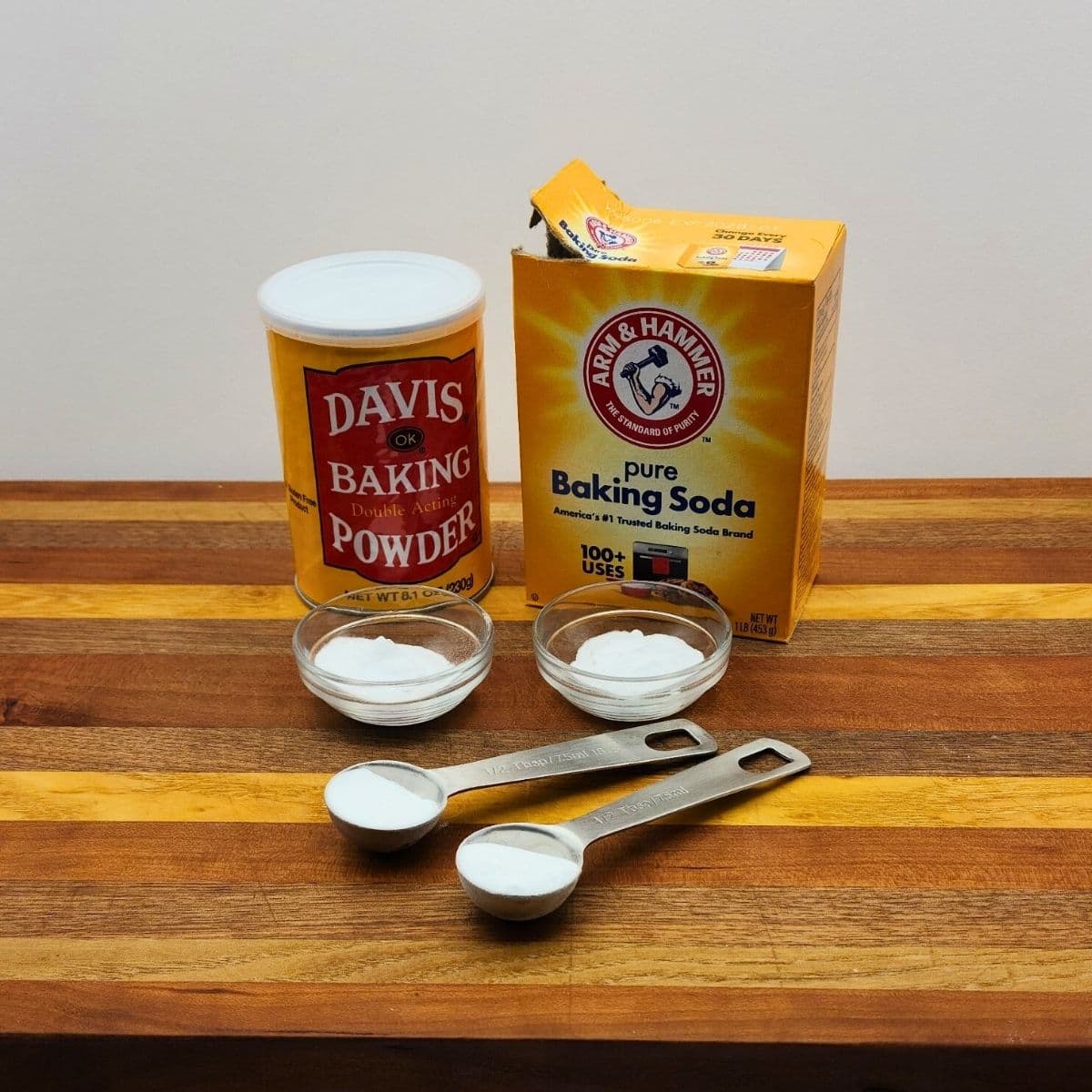
Your cookies spread into flat discs. Your cake rose beautifully, then collapsed. Your biscuits tasted like soap. Three different problems, one likely culprit: you grabbed the wrong white powder.
Baking powder and baking soda look identical in your pantry, but swap one for the other and you'll know immediately. These two leaveners work through completely different mechanisms.
After years of baking and more failed experiments than I'd like to admit, I've landed on a simple rule that covers almost every situation: powder puffs, soda spreads. That phrase alone will get you through most recipes. But if you want to understand why it works, and what to do when things get complicated, read on.
The Wrong Advice First
Let's clear up the myths that cause the most problems:
"They're basically the same thing." No. Baking soda is a single ingredient (sodium bicarbonate). Baking powder is baking soda plus acids and filler, pre-mixed in specific ratios. They react differently, produce different textures, and cannot be used interchangeably without adjustments.
"You can substitute 1:1." This is where flat cakes and soapy cookies come from. Baking soda is roughly three times stronger than baking powder. Swap them equally and you'll either have way too much leavening (batter overflows, then collapses) or not nearly enough (dense, flat results).
"It doesn't really matter which one you use." It matters enormously. The wrong leavener affects rise, spread, browning, texture, and even flavor. I've seen the same cookie recipe produce completely different results just by changing the leavener.
What's Actually in the Box
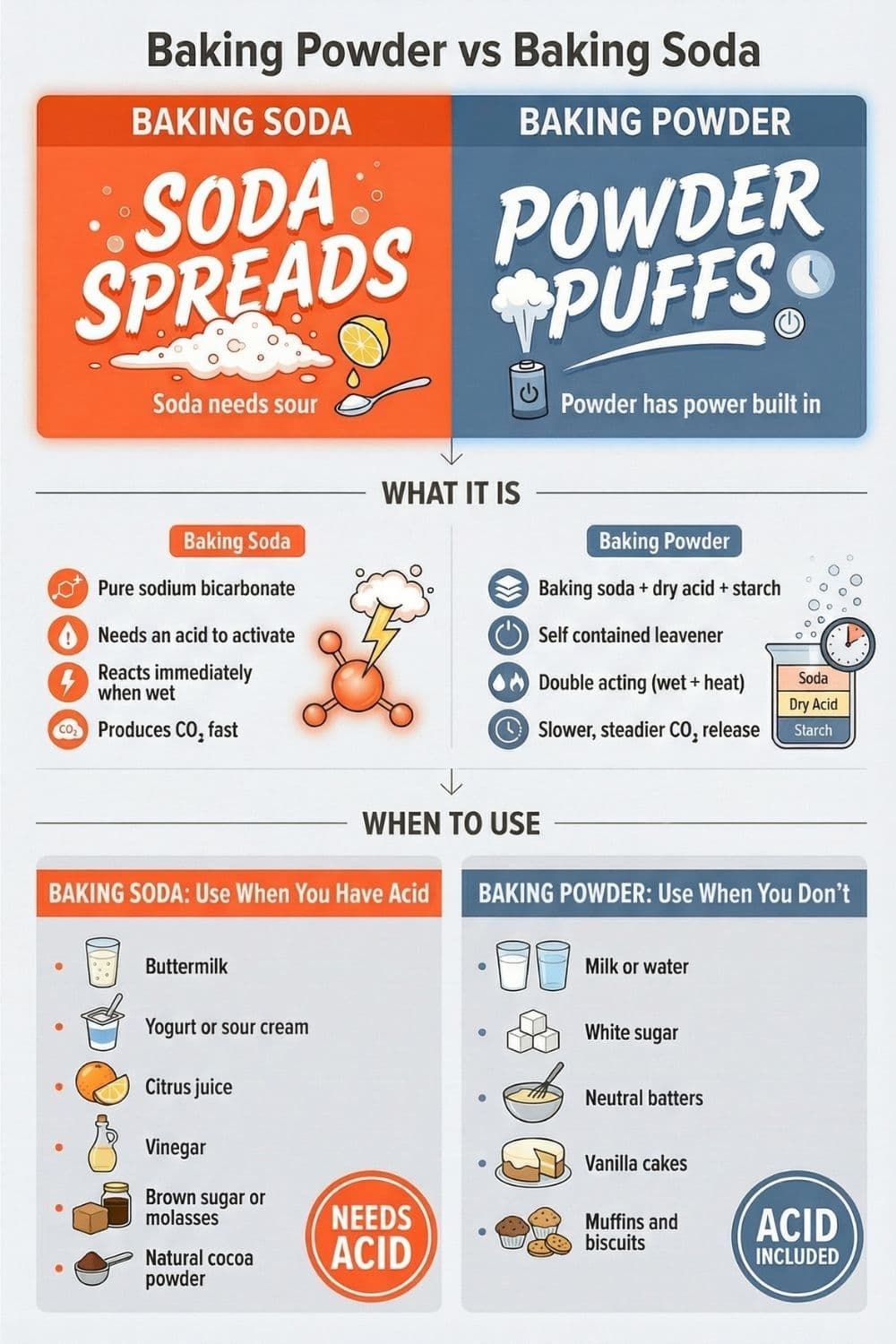
Baking soda is pure sodium bicarbonate, an alkaline compound. It needs an acid to react with, and when it finds one, it produces carbon dioxide gas. Those bubbles make your baked goods rise.
The catch: baking soda reacts immediately when it hits moisture and acid. If your batter sits too long, the bubbles escape and you lose your rise.
Baking powder is a complete leavening system. It contains baking soda, one or more dry acids, and cornstarch (to keep it from clumping). Because the acid is already included, baking powder doesn't need anything acidic in your recipe to work. Just add moisture.
Most baking powder sold today is "double-acting," meaning it reacts twice: once when it gets wet (during mixing) and again when it hits oven heat. This gives you more margin for error. Your batter can sit for a few minutes before baking without losing all its lift.
The Simple Rule: Powder Puffs, Soda Spreads
Baking powder = puff. It makes things rise up: fluffy cakes, domed muffins, tall biscuits. Lighter, more tender, paler in color.
Baking soda = spread. It makes things spread out and brown: crispy cookies with chewy centers, deeply golden gingerbread, crackling snickerdoodles. Crispier edges, more color development.
Why the difference? Baking soda is alkaline, which promotes browning (the Maillard reaction accelerates at higher pH) and affects how proteins set during baking. Baking powder's acids react with its baking soda, producing CO₂ while leaving a more neutral final pH—encouraging lift without as much spread or browning.
See it in action: Make the same cookie recipe twice, once with soda and once with powder. The soda batch spreads flat with crispy brown edges. The powder batch stays thick and pale. Same dough, completely different cookies.

When to Use Baking Soda
Use baking soda when your recipe already contains acidic ingredients:
- Buttermilk, yogurt, or sour cream provide lactic acid
- Brown sugar, molasses, or honey are mildly acidic
- Natural cocoa powder (not Dutch-processed) is acidic
- Citrus juice or vinegar are obvious acids
- Chocolate contains acids
If you see these ingredients in a recipe, baking soda makes sense. The soda neutralizes some of the acid (so your baked goods don't taste sour) and produces CO2 for rise.
Important: Because baking soda reacts fast, batters that rely on it should be baked immediately. Don't mix buttermilk pancake batter and let it sit for 20 minutes. By then, most of your bubbles have already escaped.
From my own baking, I use baking soda in chocolate cakes (the cocoa provides acid), buttermilk pancakes, Irish soda bread, and most cookies where I want browning and spread.
When to Use Baking Powder
Use baking powder when your recipe has little or no natural acidity:
- Regular milk (not buttermilk) is nearly neutral
- Eggs, butter, flour don't provide acid
- Vanilla extract is neutral
Baking powder is the default for recipes that aren't built around acidic ingredients. It's self-contained: just add moisture and heat.
Scones are a perfect example. The recipe uses regular milk and butter, neither of which is acidic enough to activate baking soda. Baking powder provides the lift that creates those flaky layers and tender crumb.
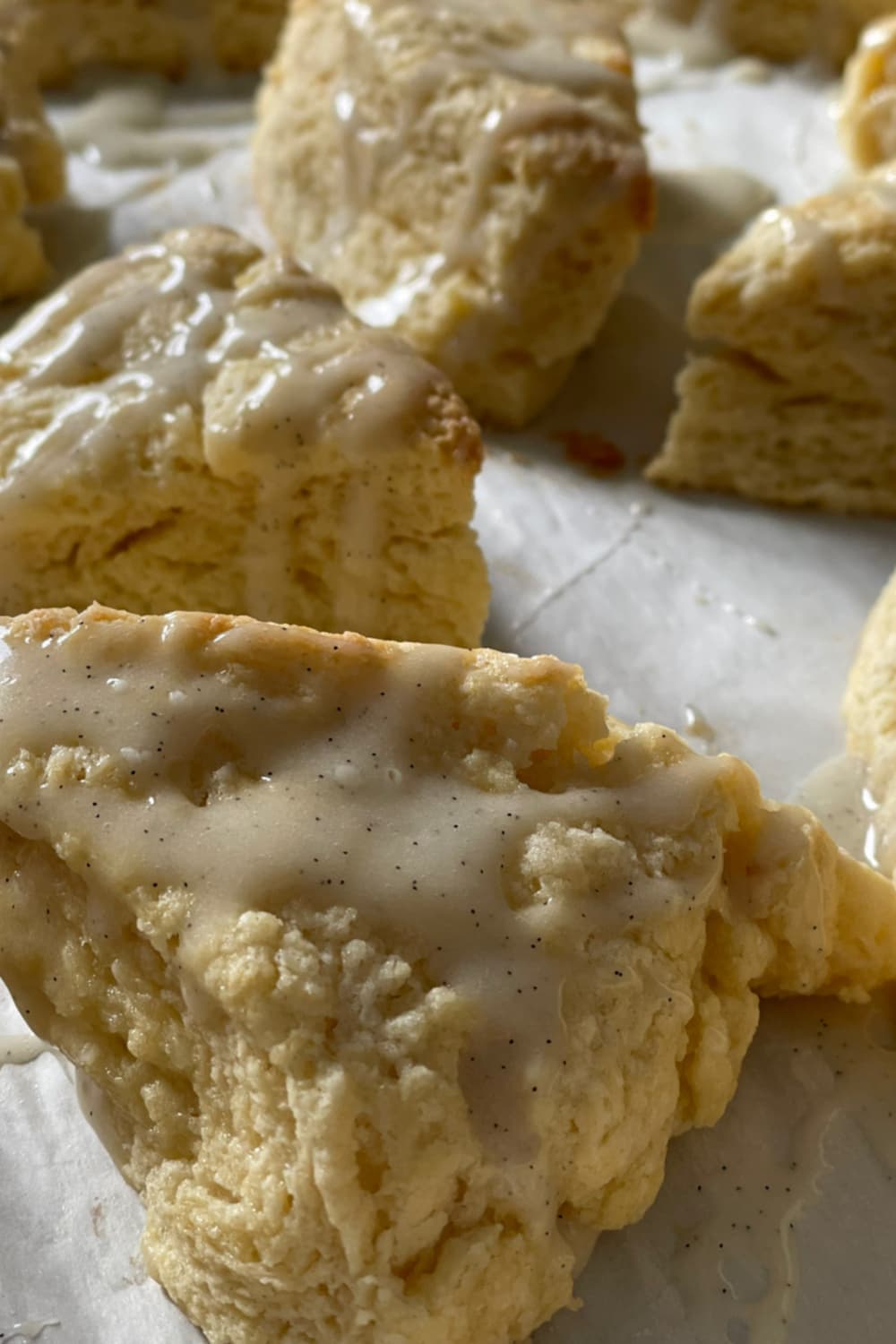
I also reach for baking powder in most muffins, pancakes made with regular milk, vanilla cakes, and biscuits.
Timing Matters: Bench Tolerance
Baking soda batters need to bake immediately. The reaction starts the moment liquid hits soda. Your buttermilk pancake batter loses lift every minute it sits. Mix it, cook it, done.
Baking powder batters are more forgiving. Double-acting powder reacts twice: once when mixed, again in the oven. Your muffin batter can sit for a few minutes while you preheat. Not unlimited patience, but more flexible than soda.
Why Some Recipes Use Both
Many recipes call for both. This isn't redundancy; it's intentional.
The scenario: A recipe has an acidic ingredient (buttermilk, cocoa), but not enough acid to fully leaven with soda alone. Too much soda would neutralize all the tang and taste soapy.
The solution: A small amount of soda neutralizes the acid. Baking powder provides the rest of the lift. Soda handles acid; powder handles rise.
In my chocolate cakes, I use both. The soda reacts with the cocoa's acidity while baking powder ensures the cake rises tall. Same principle for banana bread and buttermilk pancakes.
Substitution Rules (When You're Stuck)
Baking powder for soda: Use 3x the amount. Less browning and spread, but it works.
Baking soda for powder: Use 1/4 the amount plus 1/2 teaspoon cream of tartar per teaspoon of powder replaced. Without the acid, soda won't react.
Honest advice: These substitutions work in a pinch, but results differ. If precision matters, make a store run.
Testing Your Pantry Stock
Both leaveners lose potency over time, especially if exposed to moisture or heat.
To test baking soda: Drop 1/4 teaspoon into a tablespoon of vinegar. It should fizz vigorously and immediately. No fizz or weak fizz? Replace it.
To test baking powder: Drop 1 teaspoon into 1/2 cup of hot water. It should bubble actively. If the reaction is weak or slow, it's past its prime.
Shelf life reality: Unopened, both last about 18 months to 2 years. Once opened, they're best used within 6 months. That date on the container is a good guide, but the fizz test tells you what's actually happening.
Storage tips: Keep both in airtight containers away from moisture and heat. The pantry is fine; the fridge is not necessary and can actually introduce humidity when you open cold containers in a warm kitchen. If your baking soda came in a box, transfer it to a jar with a tight lid.
Frequently Asked Questions
Look at the ingredients list. If you see buttermilk, yogurt, sour cream, brown sugar, molasses, honey, natural cocoa, citrus juice, or vinegar, the recipe probably needs baking soda (or both). If the recipe uses regular milk, butter, and eggs without acidic ingredients, it probably needs baking powder.
The Bottom Line
Baking powder and baking soda are different tools for different jobs. Powder puffs things up; soda helps them spread and brown. One needs acid from your recipe; the other brings its own. Use the wrong one and you'll know immediately. Use the right one and everything just works.
Keep both in your pantry. Test them occasionally to make sure they're still active. And when in doubt, remember: if your recipe has buttermilk, cocoa, or brown sugar, it probably wants baking soda. If it's mostly neutral ingredients, reach for the powder.
Try our Vanilla Scones recipe to see baking powder in action, creating those flaky layers and tender crumb. And if you're ready to stock your baking station properly, shop our baking tools to set yourself up for success.